ETF Trends, Patterns and Setups – Large-cap Breadth, StochClose Downtrends, Failing Breakouts, Extended Uptrends (Premium)

Watch out for rising correlation in the stock market. Selling pressure was concentrated in large-caps on Wednesday as S&P 500 Advance-Decline Percent (-78.2%) plunged to its lowest level since June 18th. I view the plus and minus 80% levels as significant because they represent 90% up/down days. Plus/Minus 80% means 450 or more of S&P 500 stocks advanced/declined (450/500 = 90%). Advance-Decline Percent is advances less declines divided by total issues (450 – 50 = 400 and 400/500 = 80%).

Notice that AD% for the S&P 500 was positive on Friday and Monday, but it was negative for the S&P MidCap 400 and S&P SmallCap 600 (red bars). This shows mid-caps and small-caps lagging when large-caps were holding up. Now notice that S&P 500 AD% was more negative (-78.2%) than $MID AD% (64.25%) and $SML AD% (53.17%) on Wednesday.

I would not read this as a healthy sign for mid-caps and small-caps. Instead, it shows that selling pressure expanded in large-caps. Even though SPX AD% did not exceed -80%, Wednesday’s broadening of downside participation shows how correlations rise during broad market declines. This means that relatively few stocks and stock-related ETFs would be immune to a broad market correction.

You can learn more about my chart strategy in this article covering the different timeframes, chart settings, StochClose, RSI and StochRSI.

40% of Stock-Related ETFs in StochClose Downtrends

On the ETF Ranking, Trends and Setups table, some 45 stock-related ETFs are in downtrends, as per their StochClose signals. 67 are in uptrends. This means around 40% of the stock-related ETFs are in downtrends and this is a pretty sizable chunk of the stock market. The S&P 500 SPDR (SPY) and S&P 500 EW ETF (RSP) are still in uptrends, but the Russell 2000 ETF (IWM) and Russell Microcap ETF (IWC) turned bearish in mid July.  

Prior leaders and high flyers continue to lag. The downtrend signals in the ARK ETFs are between 46 and 100 days old (PRNT, ARKF, ARKG, ARKQ, ARKK, IZRL, ARKW). The down trend signals for the clean energy ETFs are between 73 and 103 days (ICLN, PBW, QCLN, FAN, TAN). The downtrends in the China-related ETFs are between 101 and 103 days (ASHR, FXI, KWEB, CQQQ). These are trading days so 100 days is around 4.5 months.

The ARK, Clean Energy and Cannabis ETFs represent the high flyers that were leading the market in February. They came down hard from mid February to May and never fully recovered. These are the high beta ETFs that represent the quintessential risk-on trade. Their continued underperformance shows that the most speculative end of the stock market is not the place to be.

In a separate, but related, comment on the ARK ETFs. Their strategy is the polar opposite of trend and momentum because Cathie Wood is adding to positions in downtrends in many cases. This is a classic averaging down strategy, which may work in the long run (5 years), but the drawdowns are going to be big. Perhaps Dr. Michael Burry, who is short ARKK, knows something about trend, momentum and valuation.

Most recently, the Natural Gas ETF (FCG), Energy SPDR (XLE) and Robotic Automation ETF (ROBO) triggered downtrend signals over the last four days. The Oil & Gas Equipment & Services ETF (XES) and Oil & Gas Exploration & Production ETF (XOP) triggered bearish around two weeks ago.

Even though I thought the surge in the 20+ Yr Treasury Bond ETF (TLT) was a counter-trend bounce, the StochClose signal has been bullish since July 8th (30 days) and bonds are leading the market over the last few months. StochClose signals are purely systematic in nature, while visual chart analysis has a clear discretionary element. The chart below shows TLT forming a bull flag just above the 200-day SMA. A breakout at 150 would be bullish. The indicator windows show TLT with a 9.18% gain the last 65 days and the S&P 500 EW ETF (RSP) with a 1.65% gain. FWIW, the 65-day Rate-of-Change for SPY is 5.69%.

Check out this video for more on TLT, the 10-yr Yield and
Seasonal patterns for the 10-yr yield.

MDY Fails as IWM and IWC Break

The charts above showed the short-term breakdowns in IWM and IWC, small-caps and micro-caps. We are also seeing a failed breakout in the S&P MidCap 400 SPDR (MDY). The smaller we get in market cap, the weaker the price action. The chart shows MDY breaking out, holding the breakout zone for two weeks and then falling below the August 3rd low. Also notice that RSI failed in the 50-60 zone, which acts as momentum resistance in a downtrend. Technically, MDY is still in a long-term uptrend because StochClose is bullish. However, the failed breakout and RSI failure at 50 suggests that we could see a deeper pullback, perhaps to the rising 200-day.

The next chart shows SPY with a sharp two day decline (1.74%), which is shown in the bottom window. Overall, SPY remains in a clear uptrend with a new high just three days ago. The two day decline and failed flag suggest that we could see another pullback to the rising 50-day SMA, which provided great mean-reversion setups since January. One of these will fail and we will get a deeper correction at some point. A 33% retracement of the advance from late October to mid August would extend to the low 400s. This would be a decline of around 9% and a return to the rising 200-day. Take correction targets with a grain of salt.

Is this pullback different? SPY has bounced off the rising 50-day SMA at least six times since January. Jonathan Krinsky of Bay Crest Partners, says “don’t buy this dip” and I respect his assessments. See Youtube video here.

Extended and Ripe for a Correction QQQ, XLK, IGV, IBB Et Al

ETFs in this next group are basically tied to the Technology sector, except perhaps IBB. These ETFs led the market from mid May to mid August with big moves and they are quite extended. The trends are up, but these are ripe for a corrective period (rest) and I do not see any setups. This group includes the tech-related ETFs because they are highlight correlated (XLK, QQQ, SMH, SOXX, IGV, SKYY, CIBR, FDN).

The next chart shows the Nasdaq 100 ETF (QQQ) with a 17% surge from mid May to mid August. The long-term trend is clearly up, but QQQ is also extended and ripe for a correction. A 50% retracement of the May-August advance would extend to the 343 area, which also marks possible support from the prior resistance level. The chart below QQQ shows IGV with similar characteristics.

Note that there are several ETFs in strong uptrends, but these too are quite extended after big advances the last few months. Even though I do not see anything bearish on these charts and they are in clear uptrends, they are ripe for a correction and there are no active setups at the moment. These include XLRE, IYR, REZ, PHO, XLV, IHI and XLC

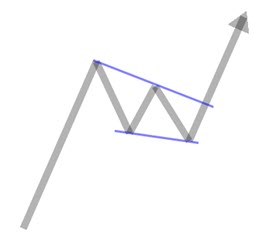
ETFs in this group hit new highs in May, corrected into July with falling wedges and broke out in late July or early August. A falling wedge/channel after a new high is deemed a bullish continuation pattern and a breakout signals a continuation of the bigger uptrend. The breakouts are holding for now with the breakout zones turning into the first support levels to watch going forward. First, a strong breakout should hold. Second, broken resistance typically turns into support. A move below the early August lows would negate the breakouts. This would not be enough to reverse the long-term uptrends, but it would argue for more correction.  

The first chart shows XLF breaking out and hitting a new high as the 10yr yield surged and TLT fell in early August. This correlation suggests that a flag breakout in TLT would be negative for the finance sector and banks. The breakout zone and early August lows mark a support zone to watch on a pullback. A close below 36 would negate the breakout and be negative.

The red line on the chart above shows the ATR Trailing Stop, which is two ATR(22) values below the highest close since the breakout. This is a tight stop that would trigger with a close below 37.68. This is when traders need to plan their trade and then trade according to that plan. Short-term traders may opt for a tight trailing stop after the breakout. Other traders may want to allow more wiggle room and use the early August lows as a stop. Trend-followers using bullish continuation patterns to build a position can exit when StochClose triggers bearish, which would involve a higher drawdown if triggered.

The next charts show the Industrials SPDR (XLI) and Infrastructure ETF (IFRA)  with wedge breakouts and pullbacks the last few days. The ATR Trailing Stops are holding, but are very close to triggering. The early August low (green line) is also quite close and further weakness below these levels would negate the breakouts.

The next chart shows the Materials SPDR (XLB) with a falling wedge breakout and sharp pullback that triggered the ATR Trailing Stop. The early August low and breakout zone are in the 82.5-83.5 area (green line).

You can learn more about falling wedge patterns in this video.

ETFs in this next group formed falling channels into mid July and broke out in late July. These breakouts are largely holding and we are seeing a test of the breakout zones with pullbacks the last few days. The first chart shows the Regional Bank ETF (KRE) gapping up on August 6th and breaking out of its falling channel. The ETF fell back into the gap zone this week and further weakness below the August 5th close would fill the gap and negate the breakout. Banks also surged as the 10-yr yield surged in early August and TLT fell. As such, a flag breakout in TLT would be negative for KRE and KBE.

ETFs related to the finance, industrials and materials sectors were part of a rotation we saw in late July and early August as money moved into banks, infrastructure, steel and such. The Steel ETF (SLX) is part of this group with a channel breakout in late July and a second throwback to the breakout zone here in August. The breakout zone turns into support and this is the moment of truth. The ATR Trailing Stop already triggered and further weakness below the early August lows would negate the breakout.

The next chart shows the Home Construction ETF (ITB) with another twist on the ATR Trailing Stop. First, the chart characteristics for ITB and XHB are similar to those above: new high in May, correction into July, wedge breakout. Now let’s look at a prior breakout and the ATR Trailing Stop setting. ITB formed a large triangle from October to December and broke out in January. Traders employing an ATR Trailing Stop that was two ATR(22) values below the highest close since the breakout would have been stopped out on the January or February throwbacks to the breakout zone. The alternative is to set the initial stop just below the pattern low, which usually requires a larger ATR multiplier. A 5 x ATR(22) trailing stop was needed for the January breakout. Using a 4 x ATR(22) stop on the current wedge breakout places the initial stop just below the pattern low (mid July low). This stop also trails higher when prices advance, but is wider because it is 4 ATR(22) values below the highest close since the breakout.

You can learn more about ATR Trailing stops in this post,
which includes a video and charting option for everyone.

Now we get to the failed breakouts. ETFs in this first group corrected in June-July, broke out later in July and failed to hold these breakouts. They all moved below their early August lows and triggered their ATR Trailing Stops. The first chart shows the Networking ETF (IGN) with a channel breakout in late July and then a sharp decline the last two weeks.  I highlighted the falling wedge on the candlestick chart last week, but there was no breakout and this pattern did not bear fruit.

The next chart shows the Global Auto ETF (CARZ) with a similar failure.

Failed Wedge Breakout or Failed Triangle COPX, CPER, DBB

The Copper Miners ETF (COPX) was holding its breakout at the start of the week, but fell sharply the last three days to negate the breakout. COPX also triggered the ATR Trailing Stop and closed just below the 200-day SMA. Note that StochClose triggered bearish on July 20th.

The next chart shows the Copper ETF (CPER) forming a triangle consolidation from May to August and then plunging below the lower line. I was watching the falling wedge on the candlestick chart, but CPER did not manage to hold the breakout. With this week’s decline, StochClose triggered bearish and this reverses the bullish signal from 9-June-2020.

Thanks for tuning in and have a great day!

Junk Bond Spreads Widen, Small and Micro Caps Underperform, Energy Related ETFs Fail to Bounce (Premium)

Today’s commentary will look at the recent widening in Junk bond spreads because this widening shows less confidence in corporate bonds with the highest risk. We are also seeing some risk aversion in the stock market because small-caps are lagging large-caps. Small-caps represent higher

Junk Bond Spreads Widen, Small and Micro Caps Underperform, Energy Related ETFs Fail to Bounce (Premium) Read More »

Stock/Bond Ratio Turns, Gold Follows TLT Lower, Oil Hits Support with a Bang and the Dollar Remains Rangebound (Premium)

The stock market environment is bullish and we are seeing a rotation within the stock market. Yield spreads are edging up, but so is the Fed balance sheet. Elsewhere, we are seeing more risk appetite when looking at the stock/bond ratio. The recent breakdown in bonds appears

Stock/Bond Ratio Turns, Gold Follows TLT Lower, Oil Hits Support with a Bang and the Dollar Remains Rangebound (Premium) Read More »

ETF Trends, Patterns and Setups – Signs of Rotation, Old Economy ETFs Start to Lead, Prior Leaders Start to Lag, SPY Doesn’t Care (Premium)

Signs of rotation kicked in with a big surge in the 10-yr yield and the rotations continued over the past week. We are seeing leadership from the groups that lagged from May to July. These are ETFs related to finance, industrials, materials and housing. ETFs related to tech and healthcare led the market from May to July and these groups could be poised

ETF Trends, Patterns and Setups – Signs of Rotation, Old Economy ETFs Start to Lead, Prior Leaders Start to Lag, SPY Doesn’t Care (Premium) Read More »

Weekend Video – Big Moves in Bonds, Gold and the Dollar trigger Signs of Rotation within Stock Market (Premium)

Signs of rotation suddenly appeared in the markets with the Treasury bond ETFs falling sharply and the 10-yr yield surging. The Dollar followed yields higher, while the Gold SPDR followed bonds lower. Within the stock market, we saw strength in banks lift small-caps and weakness in XLY and XLK weigh on the S&P 500 SPDR. Elsewhere, the S&P 500 EW

Weekend Video – Big Moves in Bonds, Gold and the Dollar trigger Signs of Rotation within Stock Market (Premium) Read More »

Treasury bond ETFs, Gold and Dollar Battle 200-day SMAs – Oil and SPY Remain Firmly Above Rising 200-day SMAs (Premium)

This report covers the intermarket arena: oil, bonds, gold and the Dollar. In particular, the 200-day SMAs are in play for the Treasury Bond ETFs, the 10-yr Treasury Yield, the Gold SPDR and the Dollar Bullish ETF. The Treasury bond ETFs and Dollar are just above their FALLING 200-day SMAs, and the Gold

Treasury bond ETFs, Gold and Dollar Battle 200-day SMAs – Oil and SPY Remain Firmly Above Rising 200-day SMAs (Premium) Read More »

ETF Trends, Patterns and Setups – S&P 500 Continue to Lead, Finance and Industrial SPDRs Battle for Breakouts, EV ETFs Take the Lead Again (Premium)

Tech, Healthcare, Communication Services, REITs and Water are leading the market since mid May. ETFs related to Finance, Industrials, Materials and Energy corrected in June and July. Some made bids to end these corrections (Housing, Copper, Steel) and some are struggling to get above resistance (XLI, XLF). Downtrends in the Regional Bank ETF
ETF Trends, Patterns and Setups – S&P 500 Continue to Lead, Finance and Industrial SPDRs Battle for Breakouts, EV ETFs Take the Lead Again (Premium) Read More »

Identifying and Trading the Falling Wedge (Video) – Successes, Failures and Two Current Setups

The falling wedge is a bullish continuation pattern that chartists can use to trade or invest in the direction of the underlying trend. I realized that some books show falling wedges as bullish reversal patterns, but I am only interested in bullish continuation patterns and I choose to ignore names that are hitting new lows. This video will show

Identifying and Trading the Falling Wedge (Video) – Successes, Failures and Two Current Setups Read More »

Weekend Video and Chartbook – QQQ Leads Lower, SPY and Oversold Conditions, Turn of the Month, Selling Climax in TLT (Premium)

Stocks corrected over the last two weeks with QQQ leading the way. IWM held up the best and RSI moved into the oversold zone for SPY. Today we will look at previous instances when RSI became oversold for SPY. Some indicators are pointing to a multi-week correction (NDX %Above 50-day), but we also have the turn of the month upon

Weekend Video and Chartbook – QQQ Leads Lower, SPY and Oversold Conditions, Turn of the Month, Selling Climax in TLT (Premium) Read More »

Timing Models – QQQ Reverses Short-term Uptrend, 3 Big Sectors Weigh, Medium-term Participation Wanes within SPX (Premium)

The long-term evidence (primary trend) is bullish, but we are seeing some short-term weakness (secondary trend). This is especially true in the Nasdaq 100 and Technology sector. SPY is holding up better because the Finance, Industrials and Communication Services are picking up the slack. The table below summarizes the broad market environment using the

Timing Models – QQQ Reverses Short-term Uptrend, 3 Big Sectors Weigh, Medium-term Participation Wanes within SPX (Premium) Read More »

ETF Trends, Patterns and Setups – Cyclical ETFs Lead, Tech ETFs Pullback, High-Flyers Correct Hard (Premium)

February is turning into a big month for cyclically oriented ETFs. These include: Copper Miners ETF, Metals & Mining SPDR, DB Base Metals ETF, Oil & Gas Equipment & Services ETF, Oil & Gas Exploration & Production ETF, Airline ETF, Transports ETF, Industrials SPDR, Regional Bank ETF, S&P SmallCap 600 SPDR, S&P MidCap 400 SPDR and Semiconductor ETF. The lists below shows ETFs with big gains over the last 17 trading days (February).

ETF Trends, Patterns and Setups – Cyclical ETFs Lead, Tech ETFs Pullback, High-Flyers Correct Hard (Premium) Read More »

Weekend Video and Chartbook – Oil and Base Metals lead, XLI and XLF Hit New Highs, TLT Plunges with Outsized Decline (Premium)

Today’s video starts with a performance overview for 14 asset class ETFs, sectors and top S&P 500 stocks. Small-caps, oil and commodity-related ETFs are leading the charge here in 2021. Financials are leading as XLF hit a new high and industrials came to life with XLI hitting a new high on Friday. Even though the long-term trends are up and the market is bullish overall, participation is narrowing within

Weekend Video and Chartbook – Oil and Base Metals lead, XLI and XLF Hit New Highs, TLT Plunges with Outsized Decline (Premium) Read More »

Timing Models – Commodities Lead in 2021, SPY Extends Uptrend, Extended Conditions Extend, Fed Balance Sheet Pops (Premium)

Stocks and commodities are leading in 2021 (risk on). Small-caps took a breather this week, but the Russell 2000 ETF (IWM) is still the second best performer among 14 intermarket ETFs. The DB Energy ETF (DBE) is the top performer with an 18.9% gain and the DB Base Metals ETF (DBB) gets third place with a 7.5% gain. QQQ is holding its own with a 6% gain and the

Timing Models – Commodities Lead in 2021, SPY Extends Uptrend, Extended Conditions Extend, Fed Balance Sheet Pops (Premium) Read More »

ETF Trends, Patterns and Setups – Big Gains Since November, Big Months for Finance and Energy, A Few Corrections Underway

Making money in the stock market has been pretty easy since November. And not just stocks. Oil, base metals, agriculture and silver are also up. Gold, the Dollar and bonds are down as money moved out of stock-alternatives and into riskier assets. As shown below, dozens of ETFs are up more than 40% since early November and many are up more than 20%.

ETF Trends, Patterns and Setups – Big Gains Since November, Big Months for Finance and Energy, A Few Corrections Underway Read More »

Weekend Video and Chartbook – Uptrends Extend with Small Gains, ETFs Go from Oversold to New Highs, Not Many Setups

After big gains the first week of February, stocks followed through with smaller gains the second week. A gain is a gain and new highs proliferated. SPY, QQQ, IWM and over half the ETFs in the Core List hit new highs this past week. The trends are up, the up trends are strong and the breadth models remain firmly bullish. Concerns remain with overextended conditions in IWM, the RSI over 50 streak,

Weekend Video and Chartbook – Uptrends Extend with Small Gains, ETFs Go from Oversold to New Highs, Not Many Setups Read More »

Timing Models – Stall after Surge, Short-term Breadth Indications, Sector Breadth Signals

The major index ETFs are in clear uptrends with the big three hitting new highs again this week (SPY, QQQ, IWM). We also saw 52-week highs in three of the eleven sector SPDRs (XLK, XLC and XLY). These three were leading throughout 2020 and they continue to lead in 2021. XLI, XLV and XLF are close to 52-week highs so I will not read too much into this short-term non-confirmation. In any case, XLK, XLC and XLY account for well over 50% of the S&P 500

Timing Models – Stall after Surge, Short-term Breadth Indications, Sector Breadth Signals Read More »

ETF Trends, Patterns and Setups – Oversold Bounces Materialize, Trend Monitoring Phase Kicks In

There were dozens of ETFs with short-term oversold conditions and short-term corrective patterns working at the end of January. With a bounce the last two weeks, we now have a slew of ETFs hitting new highs again and 27 ETFs in the Core list (119) with double digit gains here in February. Momentum is just the gift that keeps on giving. The performance since November is extraordinary. Here are some metrics since November 1st (69 days)

ETF Trends, Patterns and Setups – Oversold Bounces Materialize, Trend Monitoring Phase Kicks In Read More »

Scroll to Top