Mkt/ETF Commentary – Defensive Groups Still Stronger, Commodities Turn Volatile, Bank ETF Sets Up (Premium)

The market environment is never certain and there are often conflicting signals. It would be easy to say this is one of the most uncertain times ever, but that is probably not the case. There have been plenty of price shocks, global events and dislocations since 2000. Let’s not let recency bias get in the way.

Even though I am seeing conflicting signals in the market, the Composite Breadth Model is net bullish and there are clearly some pockets of leadership in the stock market. In fact, I would venture to say that even in uncertain times, there are uptrends to be found and themes emerging.

Today we are seeing uptrends and leadership in groups associated with energy, industrial commodities, agricultural commodities, defense, utilities, consumer staples and materials. Tech related ETFs led the market from the covid lows into 2021 and got big bounces the last two weeks, but they are not the true leaders. True leaders are in defined uptrends or have sizable breakouts in play.

We are in the fog of war and what you know/think is probably wrong. --Mike McKee (Bloomberg)

About the ETF Trends, Patterns and Setups Report

This report contains discretionary chart analysis based on my interpretation of the price charts. This is different from the fully systematic approach in the Trend Composite strategy series. In the ETF Trends, Patterns and Setups report, I am looking for leading uptrends and tradable setups within these uptrends. While I use indicators to help define the trend and identify oversold conditions within uptrends, the assessments are mostly based on price action and the price chart (higher highs, higher lows, patterns in play). Sometimes the chart assessment can be at odds with the indicators.

Defensive Sectors Still Leading on the Charts

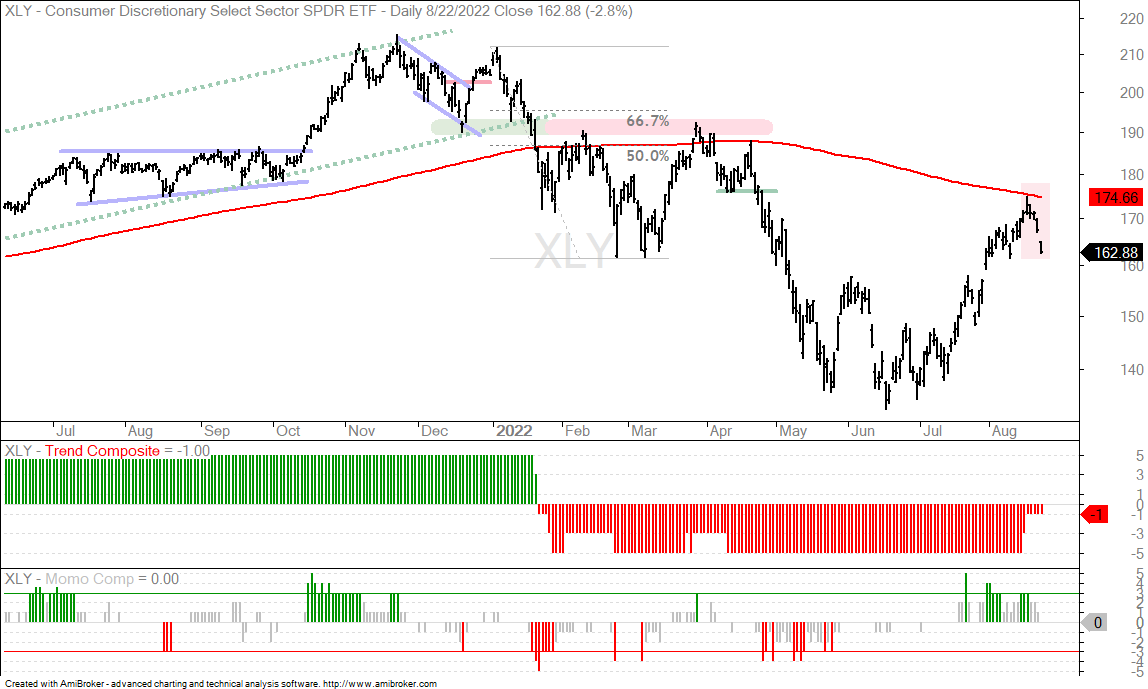
Before looking at SPY and QQQ, let’s dive into sector performance. Even though offensive groups performed well the last two weeks, the defensive groups are performing better on the price charts. XLK and XLY may have the biggest gains off the February lows, but they are lagging on the price charts because they have yet to exceed their February highs and are well below their 52-week highs. The PerfChart below shows the percentage change for SPY and the 11 sectors since mid March. XLK and XLY are up more than SPY and are responsible for a large portion of the gains over the last ten days.

Note that XLK, XLY, XLC, XLF, XLRE and XLP have yet to break their February highs. The next chart shows XLK with a wedge breakout and move above the early March high. The Trend Composite is still negative and XLK is below the February high.

XLU and XLE are the sector leaders because they recorded new highs in March. The chart below shows XLU with a pennant breakout and new high. ETFs hitting new highs are leading. ETFs below their February highs are not.

XLB, XLI and XLV are next because they broke their February highs. The chart below shows the Healthcare SPDR (XLV) with a wedge breakout in mid March and the Trend Composite turning positive on March 18th.

Bullish Wedge Breakouts or Bull Traps?

Paul Enright (@pmje73) tweeted the following recently: “Market is daring people to chase”. And indeed it is. Systematically, the Composite Breadth Model is bullish, but the Trend Composite is negative for SPY and QQQ. These two large-cap index ETFs are not the leaders right now.

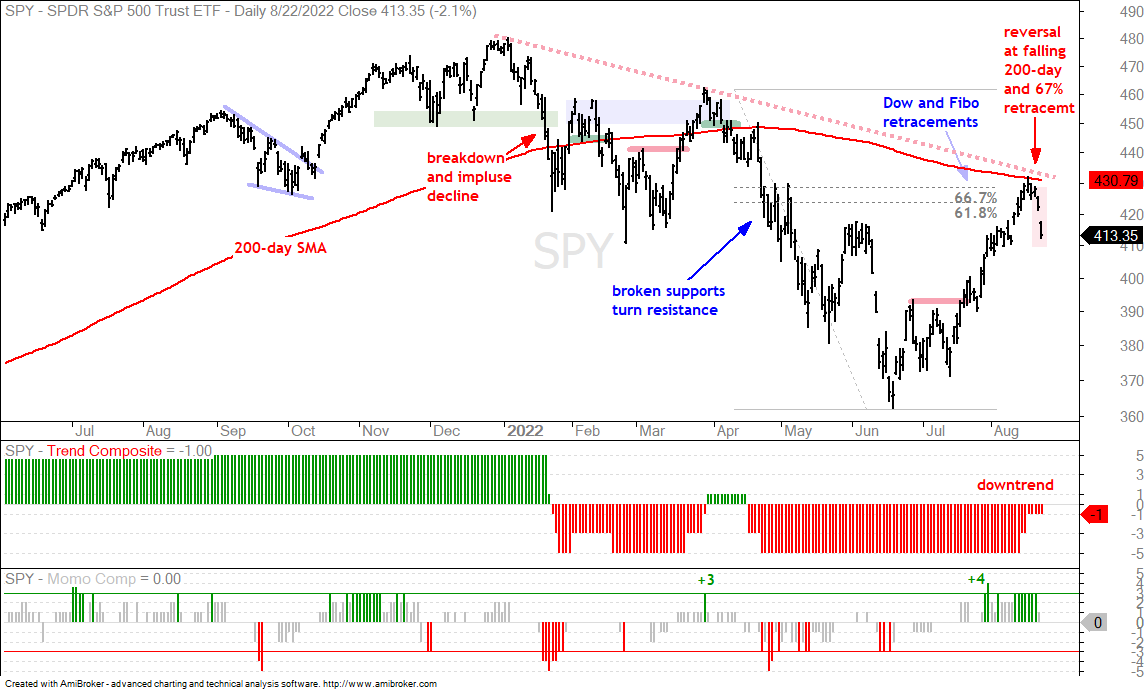
With a 9.33% advance the last ten days, SPY is trading in a potential reversal zone defined by the February highs and 67 percent retracement (blue shading). SPY is also short-term overbought after this big move. My sarcastic self thinks that we will probably see a break above the February highs to sound the “all clear” and then get a pullback or reversal.

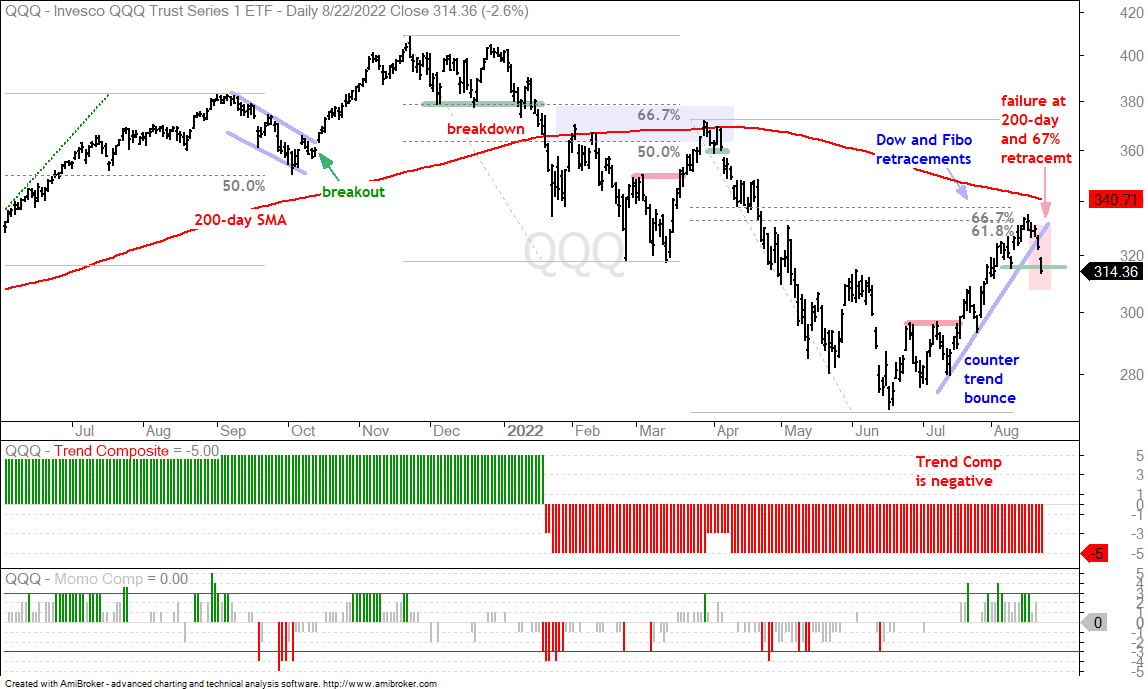
At the very least, I am not ready to take the “dare” with SPY up 9.33% and in a potential reversal zone. I would be more inclined to wait for a pullback or tradable pattern to emerge (such as a falling flag, falling wedge or triangle). The next chart shows QQQ with similar characteristics.

The Trend Composite aggregates trend signals in five trend-following indicators: 5-day ROC of 125-day SMA, Bollinger Bands (125,1), Keltner Channels (125,2,125), CCI (125) based on Closing Prices and StochClose (125, 5). You can learn more about the Trend Composite here.

The Trend Composite is part of the TIP Indicator Edge Plugin for StockCharts ACP

One Pro's View

Here is a short video from Jonathan Krinsky, Chief Market Technician at BTIG. Overall, the defensive groups are outperforming offensive groups.

IWO and QQQJ Form High and Tight Flags

QQQ is up 2.2% the last four days and SPY is up 1%, but IWM is down .63%, the Russell 2000 Growth ETF (IWO) is down 1.11% and the Nasdaq 100 Next Gen ETF (QQQJ) is down .17%. Even though the latter three are lagging and not keeping pace, they are forming flag like patterns over past week and upside breakouts would be short-term bullish.

These flags are high and tight, which means there was a very sharp advance and then a tight consolidation. Such flags are typically bullish continuation patterns and breakouts could open the door to further gains. Breakouts in these three high-beta ETFs would also suggest more risk-on in the market.

High and tight flags offer a good reward to risk ratio because a stop can be placed just below the flag low. Even so, I think the risk of whipsaw is above average. A whipsaw would involve a failed breakout and move below the flag low. This is also a very short-term setup and the overall trend is still down. This also means the odds of failure are above average.

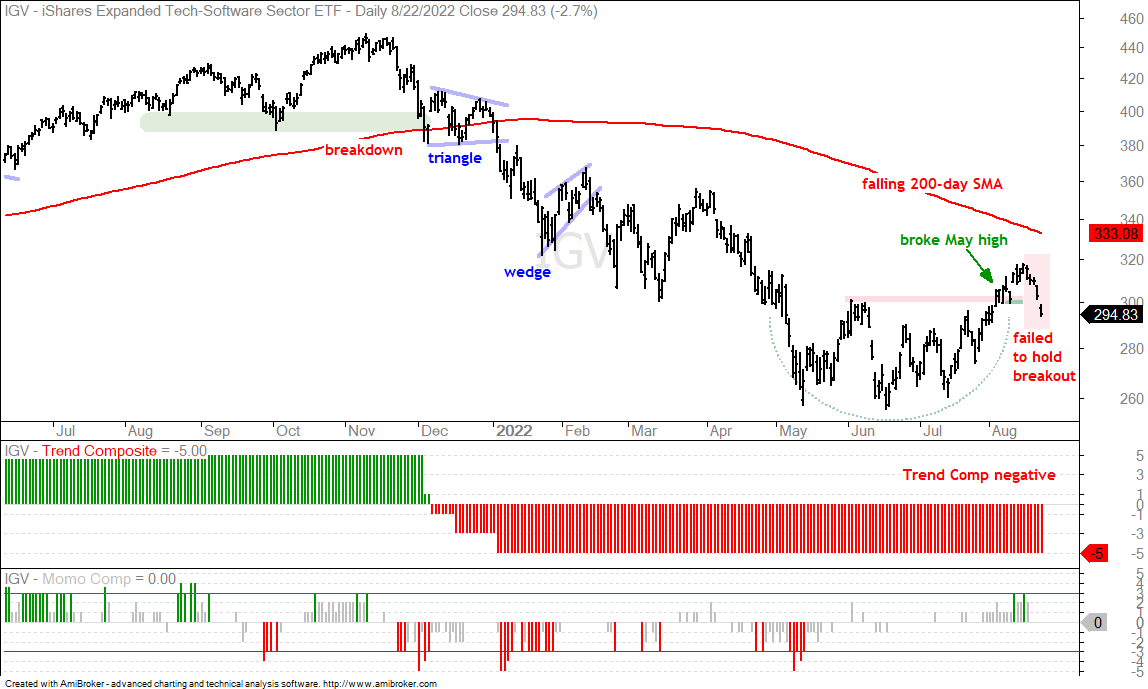
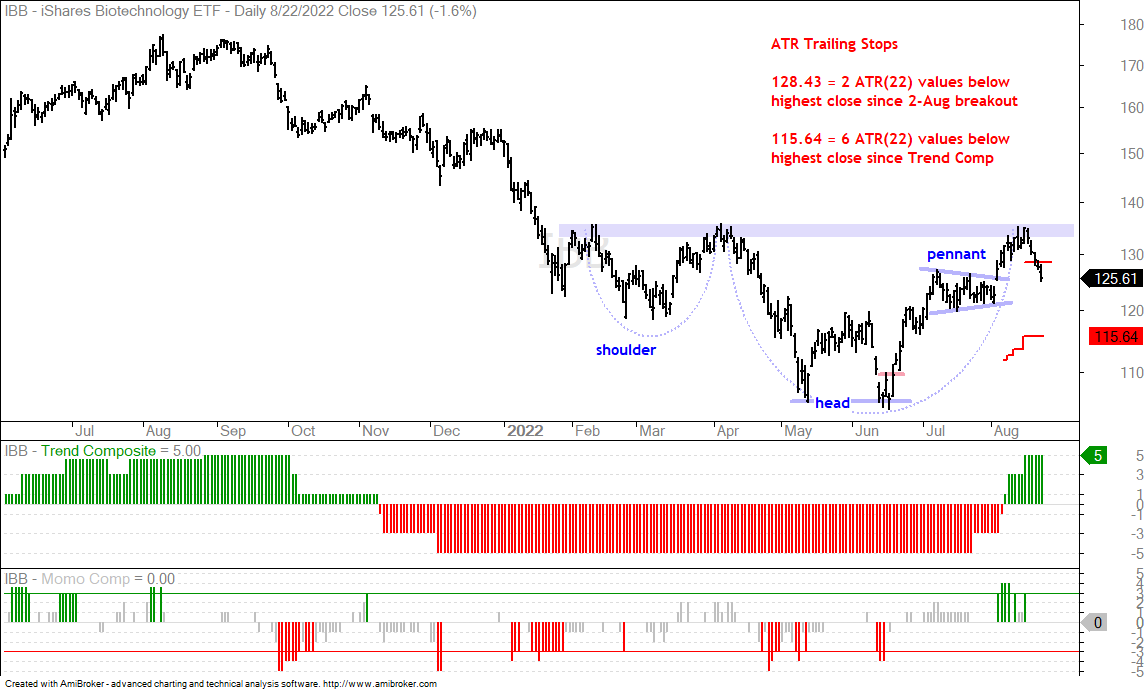
Unsurprisingly, there are lots of high and tight flags in some of the beaten down groups. These include the Cloud Computing ETF (SKYY), FinTech ETF (FINX), Mobile Payments ETF (IPAY), Internet ETF (FDN), Software ETF (IGV) and Biotech ETF (IBB).

And finally, the Junk Bond ETF (JNK) surged in mid March and formed a falling wedge the last six days. A wedge breakout would be short-term bullish and call for a bigger corrective bounce within the even bigger downtrend. Junk bonds represent the risk-off end of the bond market so a bounce here would be positive for credit market stress.

You can learn more about exit strategies in this post,
which includes a video and charting options for everyone.

Choppy Uptrends, New highs or Near New Highs

IFRA, PBJ, IHF, DVY

In addition to the Utilities SPDR (XLU), we are seeing choppy uptrends extend for the Infrastructure ETF (IFRA), Food & Beverage ETF (PBJ) and Select Dividend ETF (DVY). IFRA is 40% utilities so it is catching a ride with XLU. PBJ is clearly defensive because we need food and beverages no matter what. DVY is also defensive with utilities accounting for 25.6% of the ETF and 10% coming from consumer staples. Note that 23% of its components are from the finance sector.

Oil Takes Volatility to New Levels

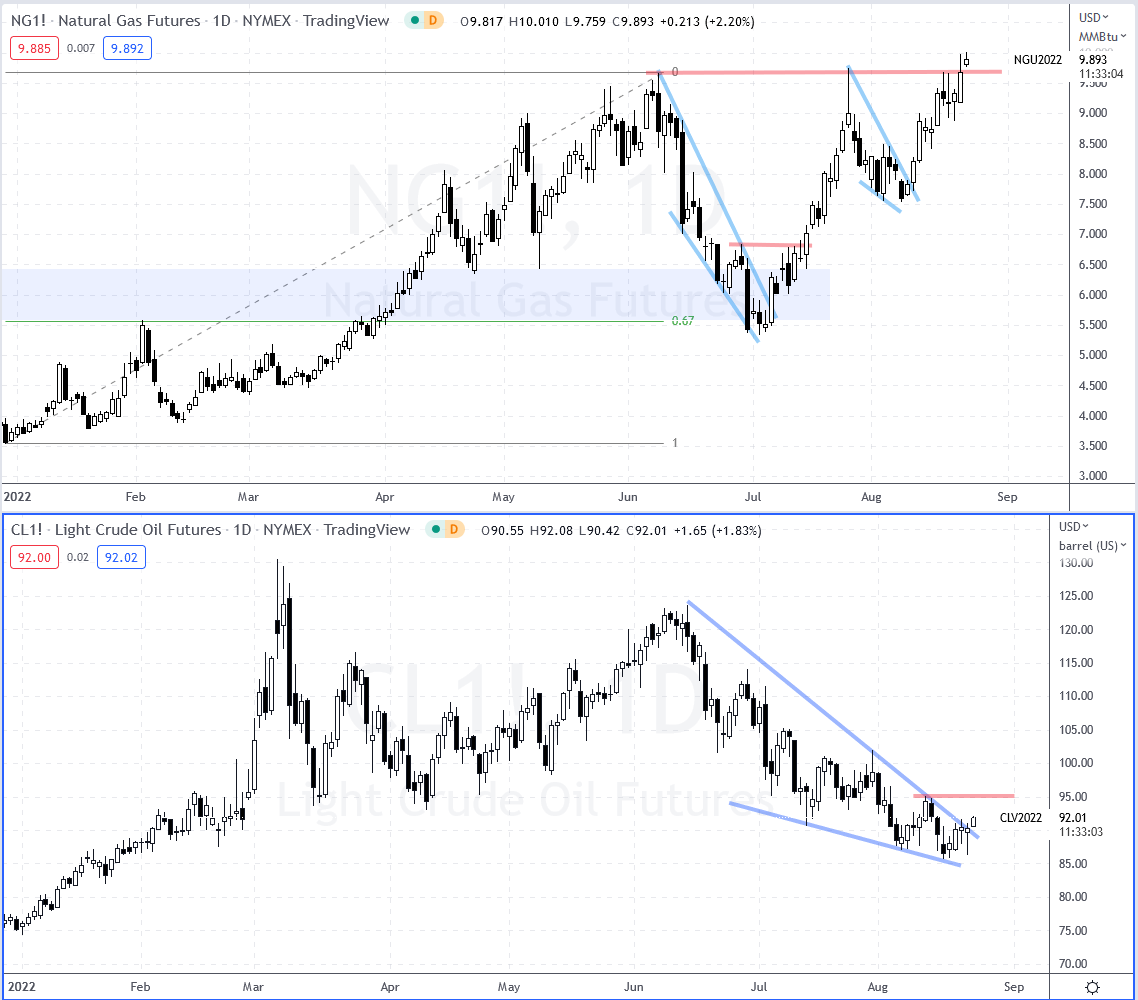
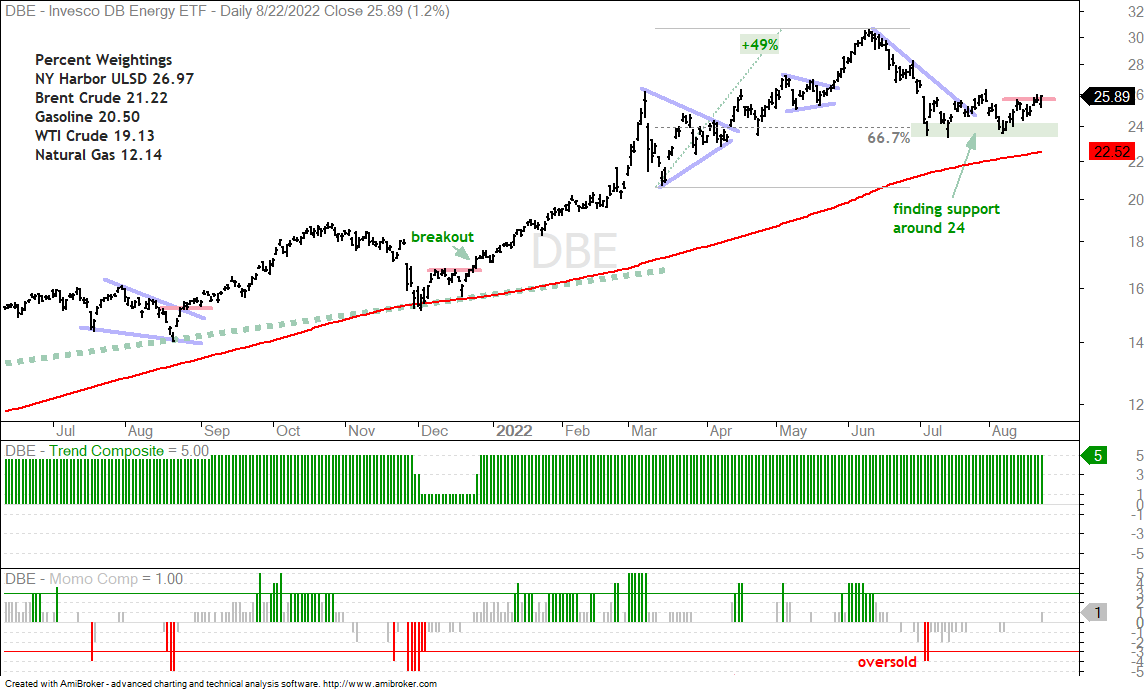
Oil remains in a long-term uptrend and volatility is the name of the game short-term. The DB Energy ETF (DBE) surged some 25% after the invasion, fell 18% in early March, surged 17% in mid March and then fell 5.3% on Monday. The short-term swings are anyone’s guess right now, but the long-term trend is clearly up. At this stage there is nothing to do but wait for a oversold condition or short-term setup.

Flag Breakouts and New Highs for Energy ETFs

XLE, XES, FCG, XOP

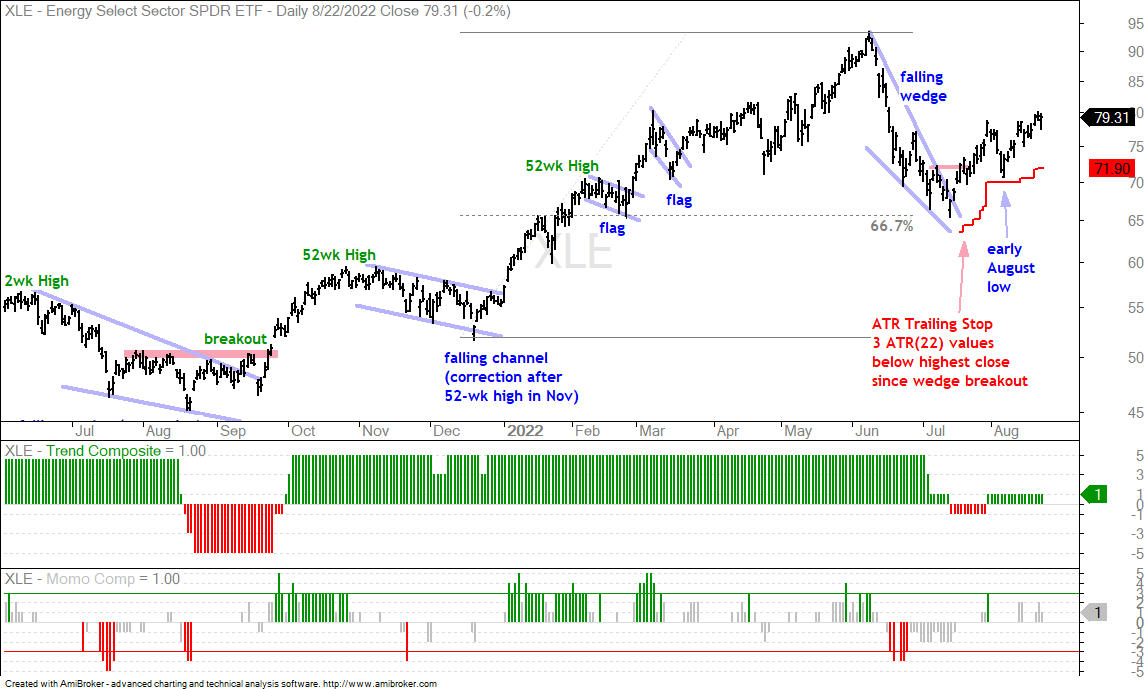
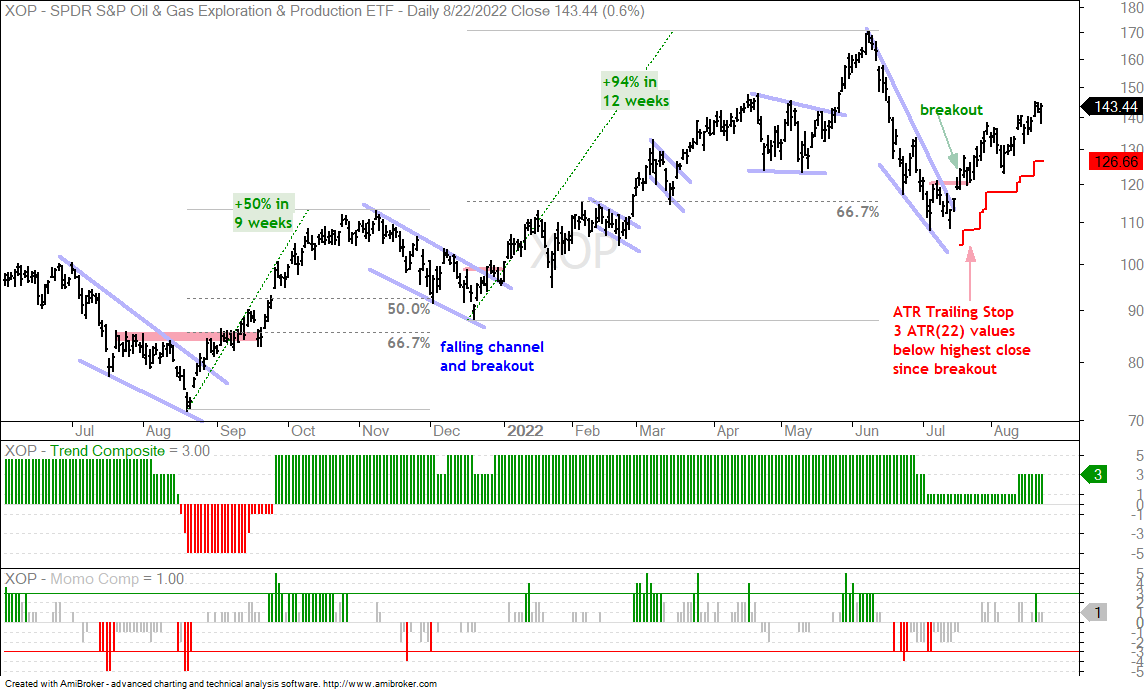
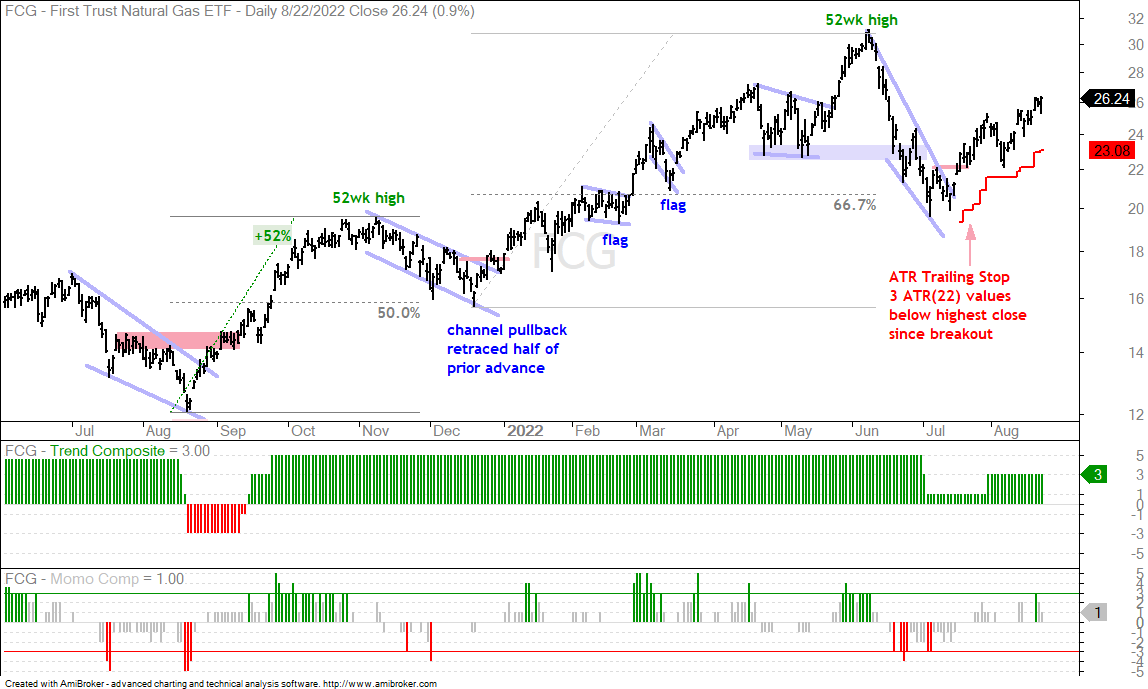
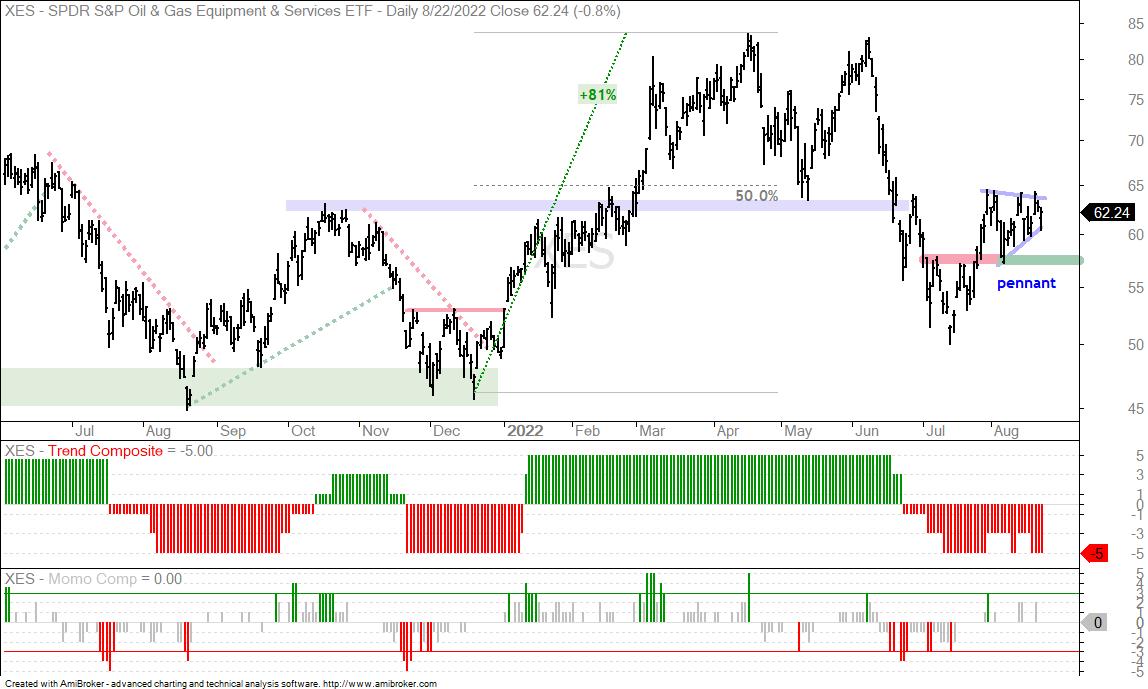
Volatility in oil and gas could carry into the energy-related ETFs, but they too are in long-term uptrends and the path of least resistance, though volatile, is up. They all sport surges off their mid March lows and flag breakouts. There are no setups on the charts, just strong and leading uptrends.

Big surges and new highs: MOO, XME, SLX, COPX

The Agribusiness ETF (MOO), Metals & Mining SPDR (XME), Steel ETF (SLX) and Copper Miners ETF (COPX) have market leading surges since February. Note that SPY is up 1.65% since January 31st. These four are up between 13.63% (MOO) and 48.44% (XME). XME was featured in the Trend Composite strategy article on March 28th because it was added to the simulated portfolio. It had the highest StochClose value of the ETFs that were not already in the portfolio. Keep in mind that this is purely systematic. Discretionary chart analysis shows a massive breakout in mid February, two flags during the advance and new highs last week. XME is overbought by most metrics and I do not see a chart setup right now, but it is clearly a momentum leader. MOO looks the same as XME.

The Copper Miners ETF (COPX) surged to new highs last week and remains a leader overall. Like most commodity ETFs, the advance this year has been quite choppy with rather sharp pullbacks along the way. There is nothing to do here but ride the big trend or wait for a tradable pullback.

Agriculture Maintains Uptrend and Sugar Holds Breakout

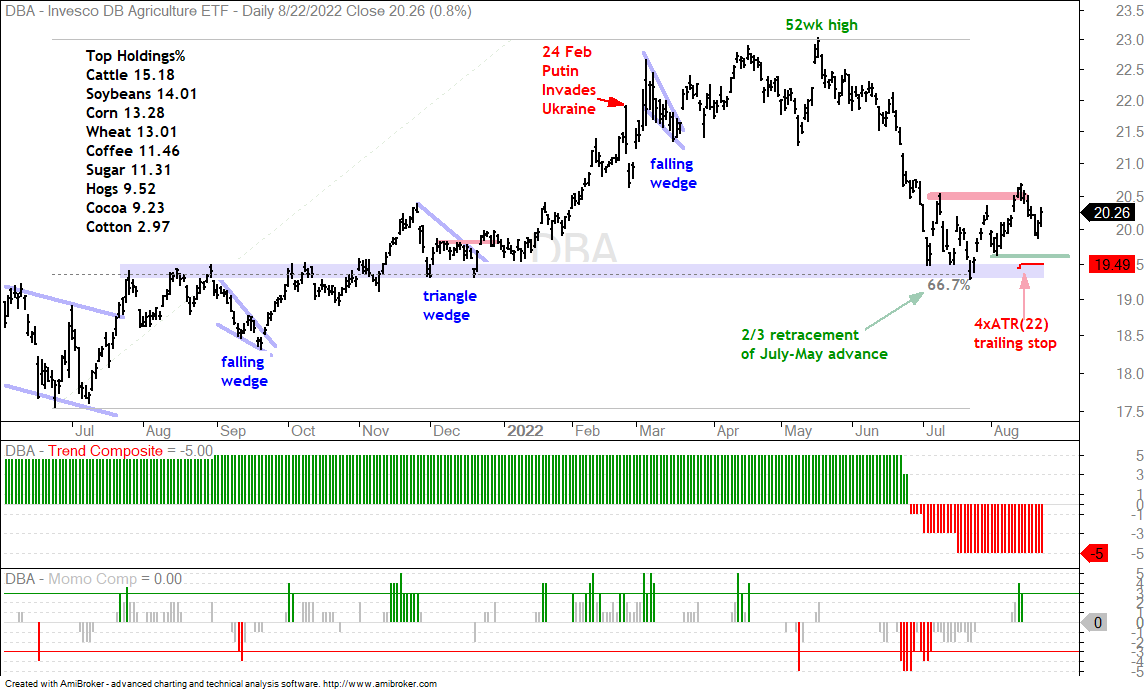
The DB Agriculture ETF (DBA) got a tradable pullback with the falling wedge into mid March and broke out with a surge on March 21st. The long-term trend is clearly up and DBA is a leader with a new high in March. The second chart shows the Sugar ETF (CANE) holding its wedge breakout with a move higher the last two weeks.

Gold and Silver Fall back after Short-term Breakouts

Gold and silver were hit hard on Monday and the futures are trading lower on Tuesday. Both appeared to break short-term resistance with surges early last week, but these short-term breakouts are failing. I would not read too much into these failed short-term breakouts because volatility is high and the bigger trends are up. The chart shows GLD with a bounce off the reversal zone marked by broken resistance levels and the 50-67 percent retracements (blue shading). Further weakness today would put GLD back into this zone and this zone remains a potential reversal zone.

The Silver ETF (SLV) is basically gold on steroids. It is highly correlated to gold, but has much higher volatility. The Trend Composite is still positive and SLV did exceed the November high for a higher high (and Double Bottom breakout). Even though prices are back below the breakout zone, this could be a pullback after the 22% surge from early February to early March. I will watch to see if a setup emerges in the 50-67 percent retracement zone.

Four ETFs with Notable Breakouts Working in March

The next charts show four ETFs with different breakouts working. First, the Uranium ETF (URA) hit a new high in November, formed a falling channel correction into January, held its summer low and broke out on March 29th.

The Strategic Metals ETF (REMX) hit a new high in December, formed a falling channel correction that retraced 50% and forged a wedge breakout on March 22nd.

The Residential REIT ETF (REZ) hit a new high at year end, formed a falling wedge into late February and broke out of the wedge in early March.

Aerospace & Defense ETF (ITA) and related ETFs (XAR, PPA) got big breakouts in early March, pulled back with small falling wedge patterns and broke out of these wedges in mid March.

Regional Bank ETF Sets Up within Choppy Uptrend

The Regional Bank ETF (KRE) is also a case study where the Trend Composite does not jibe with the price chart. The Trend Composite turned negative in early March, but the price chart shows a choppy uptrend since late summer. KRE hit a new high in mid January and declined with a channel/wedge correction into March. The string of higher highs and higher lows remains intact and the falling channel looks like a correction. A breakout at 73 would reverse this fall and signal a continuation of the bigger uptrend.

You can learn more about my chart strategy in this article covering the different timeframes, chart settings, StochClose, RSI and StochRSI.

Thanks for tuning in and have a great day!

Trend Composite Strategy (part 7) – Trend-Momo AllW50 BB ETF Strategy, the Nature of Trend-Following, Live Example with Signal/Ranking Table

The Composite Breadth Model turned bullish on Friday and this means the Market Regime is bullish. This also means the Trend Composite strategy outlined in part five can now choose trend-momentum signals in stock-related ETFs. Please review part five for details on this strategy.

Trend Composite Strategy (part 7) – Trend-Momo AllW50 BB ETF Strategy, the Nature of Trend-Following, Live Example with Signal/Ranking Table Read More »

Mkt/ETF Commentary – Mean Reversion Timeframe versus Trend Reversing Timeframe, 7 Themes to Keep in Mind (Premium)

It as been 18 days since Putin invaded Ukraine and SPY is up 5.32% since the close on Wednesday, February 23rd. QQQ is up 6.3% and IWM is 6.5%. The 20+ Yr Treasury Bond ETF (TLT), an alleged safe-haven, is down 4.6%. While the gains in stocks are

Mkt/ETF Commentary – Mean Reversion Timeframe versus Trend Reversing Timeframe, 7 Themes to Keep in Mind (Premium) Read More »

Weekend Video – Biggest Moves since Nov-2020, Small-caps Lag, Hard Throwbacks for Oil, Gold and Metals (Premium)

This video starts with broad market analysis and then moves to the individual ETFs. The broad market section includes the Composite Breadth Model, Fed balance sheet and yield spreads. Breadth indicators, SPY, QQQ, bonds, gold and the Dollar are also covered. The ETF section

Weekend Video – Biggest Moves since Nov-2020, Small-caps Lag, Hard Throwbacks for Oil, Gold and Metals (Premium) Read More »

Trend Composite Strategy (Part 5) – All Weather List, Cross versus In-State Signals, Bear Market Alternatives

Today’s article is the fifth installment of the Trend Composite strategy. The series was put on hold because of recent events and market volatility, but continues today and will complete before the end of the month. Today’s installment uses the highly curated All Weather ETF List, which covers most assets and has minimal overlap.

Trend Composite Strategy (Part 5) – All Weather List, Cross versus In-State Signals, Bear Market Alternatives Read More »

Mkt/ETF Commentary – Short-term Volatility is a Challenge, but it Does not Change Existing Trends (Premium)

It is important to remember that the major trends in play right now were in place before Russia invaded Ukraine. High-flying tech stocks were out of favor late last year and remain out of favor. Weakness spread as the Market Regime turned bearish in mid February and remains bearish.

Mkt/ETF Commentary – Short-term Volatility is a Challenge, but it Does not Change Existing Trends (Premium) Read More »

Weekend Video – Breadth Deteriorates, Yield Spreads Widen, Commodities Turn Volatile, Very Few Uptrends in Stock-Related ETFs (Premium)

This video starts with broad market analysis and then moves to the individual ETFs. The broad market section includes the Composite Breadth Model, Fed balance sheet and yield spreads. Breadth indicators

Weekend Video – Breadth Deteriorates, Yield Spreads Widen, Commodities Turn Volatile, Very Few Uptrends in Stock-Related ETFs (Premium) Read More »

Mkt/ETF Commentary – Volatility and Bear Markets, Perspective on the Sharp Bounce in Stocks and Decline in Commodities (Premium)

The idea was to continue the Trend Composite series today, but the markets are moving fast so I thought I would address yesterday’s big bounce in stocks and the big declines in the commodity related ETFs. These moves did not reverse existing

Mkt/ETF Commentary – Volatility and Bear Markets, Perspective on the Sharp Bounce in Stocks and Decline in Commodities (Premium) Read More »

Weekend Video – Weight of Evidence is Bearish, Defensive Groups Shine, Some Commodities Go Parabolic (Premium)

This video starts with broad market analysis and then moves to the individual ETFs. The broad market section includes the Composite Breadth Model, Fed balance sheet and yield spreads. Breadth indicators, SPY, QQQ, bonds, gold and the Dollar are also covered.

Weekend Video – Weight of Evidence is Bearish, Defensive Groups Shine, Some Commodities Go Parabolic (Premium) Read More »

Mkt/ETF Commentary – Retail Trends Lower, Finance Looks Vulnerable, Breakouts in Defense, Uranium and Steel (Premium)

The Composite Breadth Model remains bearish and the S&P 500 SPDR is in a downtrend since the January breakdown. The S&P SmallCap 600 SPDR (IJR) held up a little better than SPY in January-February, but remains short of a resistance breakout that would negate the January breakdown. In short, the trends

Mkt/ETF Commentary – Retail Trends Lower, Finance Looks Vulnerable, Breakouts in Defense, Uranium and Steel (Premium) Read More »

Weekend Video – Two Day Reversal vs 2022 Technical Damage, Yield Spreads Widen, Commodity-Related ETFs Still Leading (Premium)

Stocks staged a big intraday reversal on Thursday and followed through on Friday with strong breadth (one day). The two-day sequence is impressive, but not enough to undo the technical damage done the last two months (%Above 200-day, bearish breadth thrusts, expanding new low list). In addition, yield spreads continued to widen and show rising stress

Weekend Video – Two Day Reversal vs 2022 Technical Damage, Yield Spreads Widen, Commodity-Related ETFs Still Leading (Premium) Read More »

Mkt/ETF Commentary – Big Moves in the Direction of Existing Trends, Commodities Up, Stocks Down, Dollar and Gold Up (Premium)

The markets are getting rattled with big moves after the invasion of Ukraine, but these moves are in the direction of existing trends. Oil, industrial metals, gold and agriculture were already in market leading uptrends. They are also up strong today. SPY, QQQ and many ETFs were already in downtrends after impulse declines in January. There were oversold bounces in February, but

Mkt/ETF Commentary – Big Moves in the Direction of Existing Trends, Commodities Up, Stocks Down, Dollar and Gold Up (Premium) Read More »

Trend Composite Strategy (Part 4) – Volatility-Adjusted Performance, Portfolios based on Trend and Price Performance, Bear Market ETFs

Today’s article is the fourth installment in the Trend Composite series. We started with an introduction to the Trend Composite, tested uptrend/downtrend signals and then moved to portfolio level testing using StochClose as the tiebreak. Today we focus more on StochClose rank by using

Trend Composite Strategy (Part 4) – Volatility-Adjusted Performance, Portfolios based on Trend and Price Performance, Bear Market ETFs Read More »

Scroll to Top