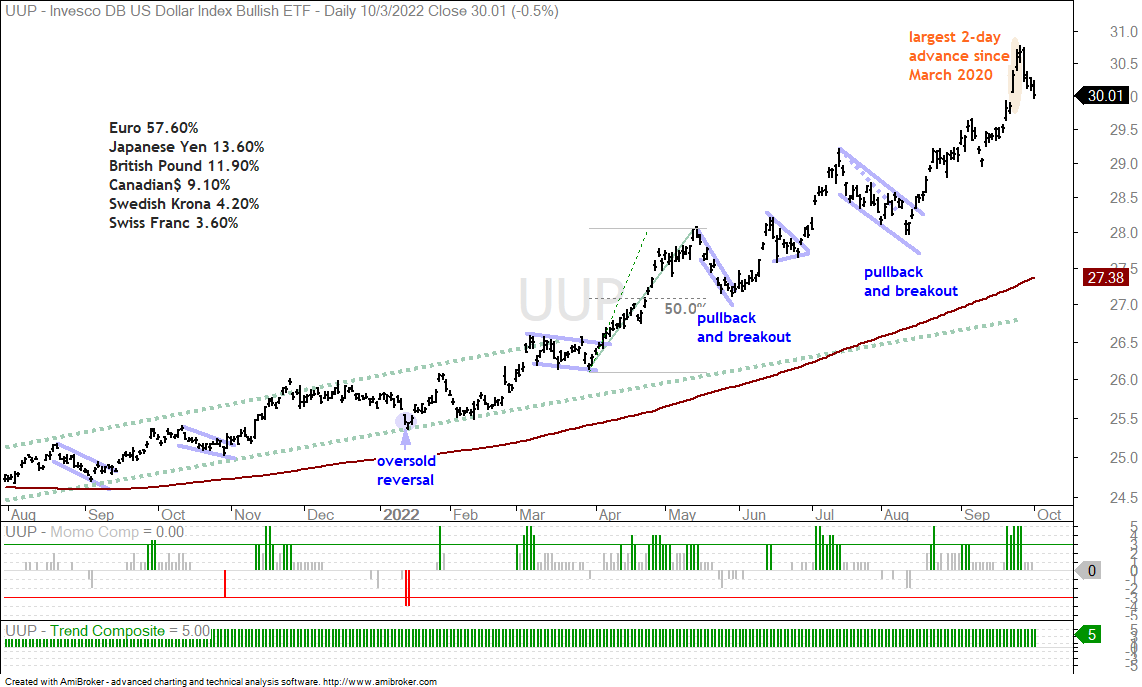
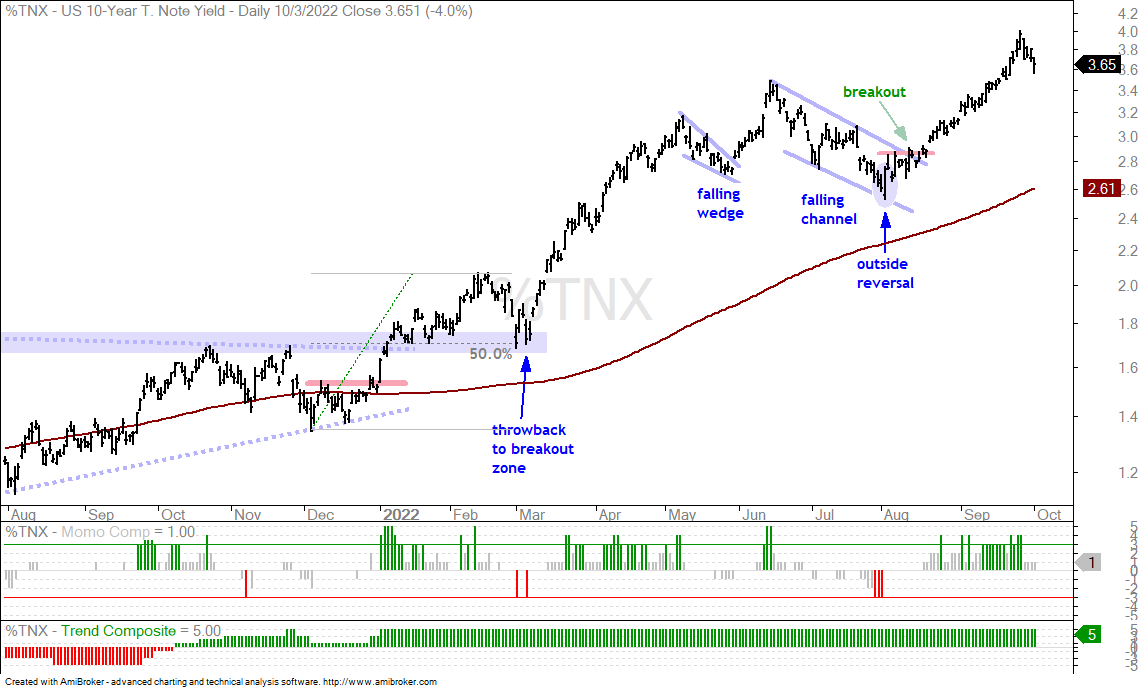
The Dollar finally took a breather from its rapid ascent with a four day pullback and we also saw the 10-yr Treasury Yield fall from around 4% to 3.6%. The Dollar represents the risk-off trade so the pullback facilitated a bounce in stocks. Also note that Treasury yields and stocks have been negatively correlated so the pullback in yields was also welcome news for stocks. Despite pullbacks in the Dollar and 10-yr Treasury Yield, the long-term trends are up and these are just pullbacks within bigger uptrends. Both got overextended on the upside and a pullback is normal at this stage.
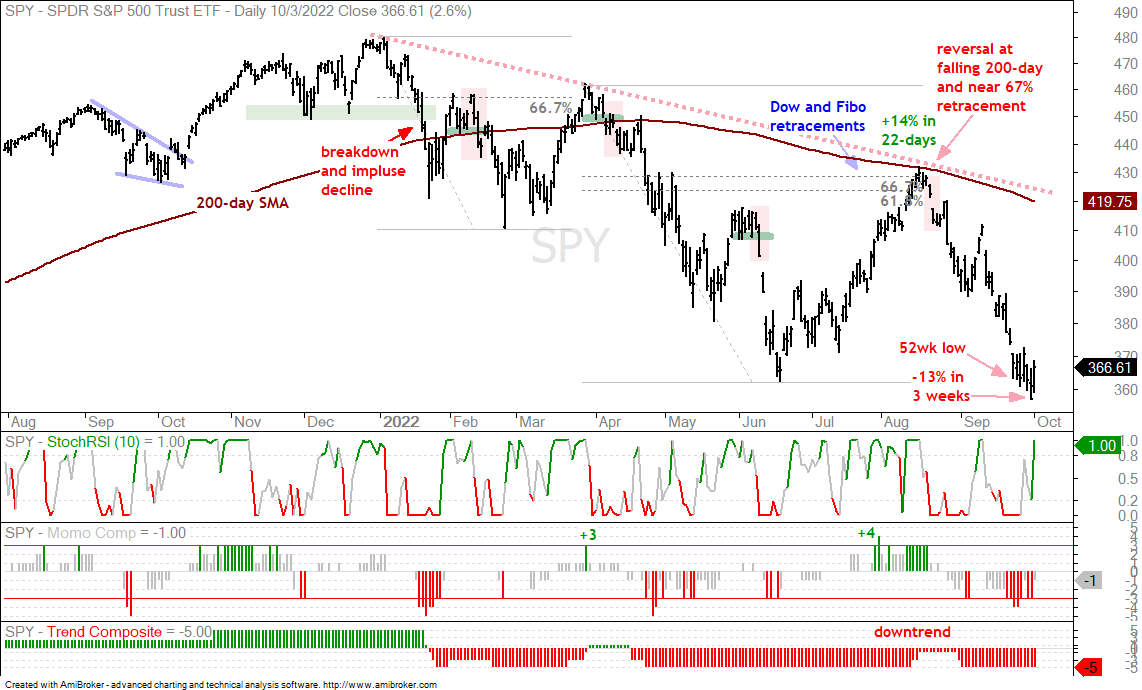
SPY Becomes Extremely Oversold
Stocks remain in a long-term downtrend and were quite oversold after SPY fell 13% in three weeks. Also note that SPY fell around 17% from its mid August high. The conditions were, and are, ripe for an oversold bounce or consolidation. Also note that SPY “broke” its June low, which some consider a key support level. My experience suggests that SPY is more likely to bounce soon after breaking a prior trough, especially when extremely oversold. At this point, any bounce is still considered an oversold bounce within a bigger downtrend. QQQ and IWM will follow SPY.
About the ETF Trends, Patterns and Setups Report
This report contains discretionary chart analysis based on my interpretation of the price charts. This is different from the fully systematic approach in the Trend Composite strategy series. In this ETF Trends, Patterns and Setups report, I am looking for leading uptrends and tradable setups within these uptrends. While I use indicators to help define the trend and identify oversold conditions within uptrends, the assessments are mostly based on price action and the price chart (higher highs, higher lows, patterns in play). Sometimes the chart assessment can be at odds with the indicators.
This Week's Commentary Schedule
Tuesday – 4 October: Market-ETF Report and Signal-Rank Table Update
Wednesday – 5 October Market-ETF Video and Market Regime Update
Thursday – 6 October: Market-ETF Report and Signal-Rank Table Update
Saturday – 8 October: ETF Signal and Rank Table
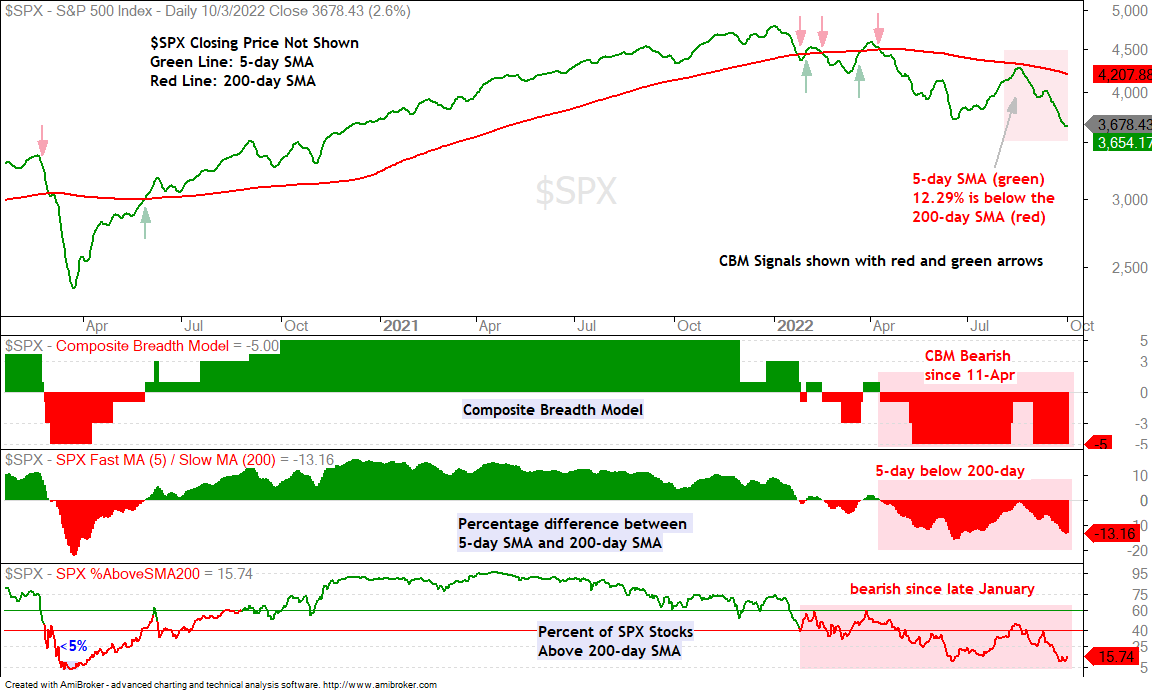
Composite Breadth Model Remains Bearish
There is no change in the Composite Breadth Model, which remains at -5 and bearish. The long-term trend for the S&P 500 is clearly down with the 5-day SMA some 13% below the falling 200-day SMA. This is also a bit stretched and argues for a oversold bounce. Around 16% of S&P 500 stocks are above their 200-day SMAs, which means 84% are below. These are clearly bear market numbers.
You can learn more about my chart strategy in this article covering the different timeframes, chart settings, StochClose, RSI and StochRSI.
Very Few ETFs in Uptrends
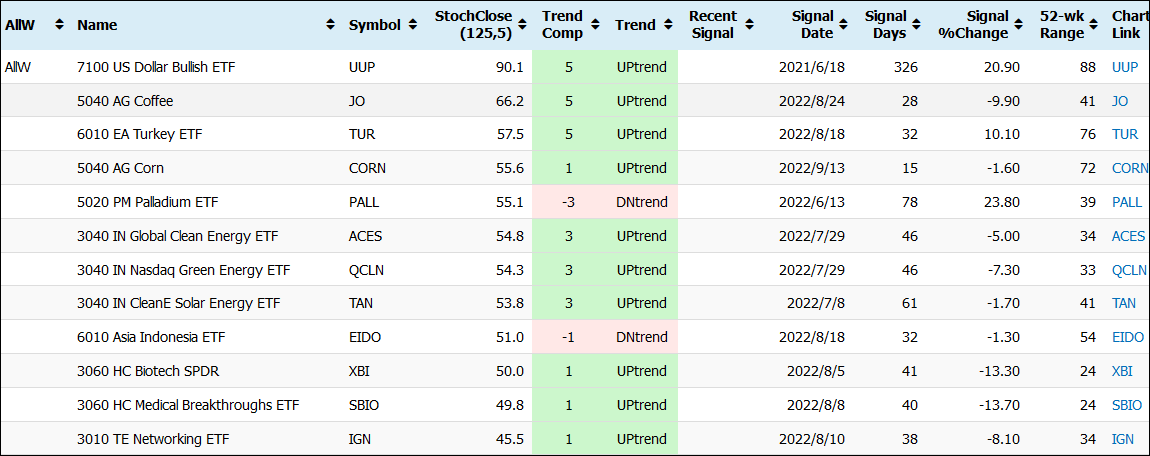
The Dollar Bullish ETF (UUP) fell back over the past week, but remains comfortably at the top of the ETF Ranking and Signal Table with a StochClose score of 90. The Coffee ETF (JO) is a distant second with a score of 66 and then it drops into the 50s. A StochClose score between 50 and 60 means price is just above the mid point of the six month range. Only 10 of the 274 ETFs in this MasterList are in uptrends and UUP is the only All Weather ETF (50) in an uptrend. This is pretty much as broad as a bear market gets and the pickings are extremely thin right now.
The Momentum Composite aggregates signals in five momentum-type indicators to identify short-term overbought and oversold conditions. This indicator is part of the TIP Indicator Edge Plugin for StockCharts ACP
Biotech SPDR Firms at Support-Reversal Zone (XBI, IBB)
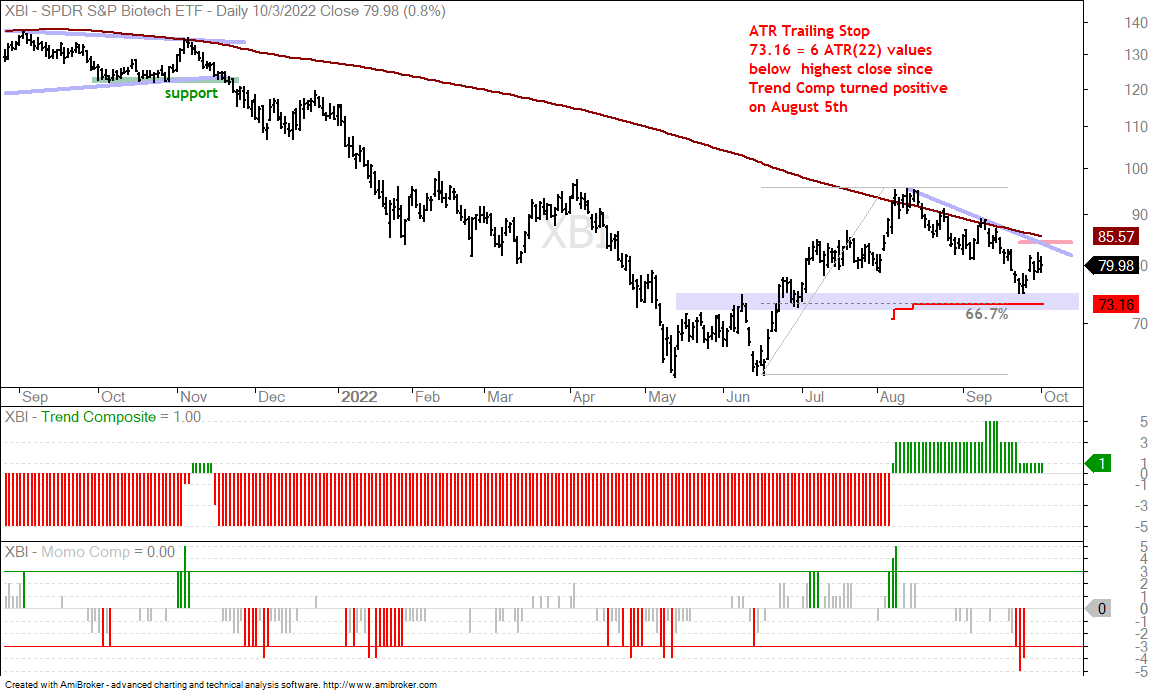
The Biotech SPDR (XBI) is one of the few ETFs that held its uptrend during the September decline and did not trigger its ATR Trailing Stop. As with most ETFs that are showing less weakness and holding up better, the trend evidence is mixed for XBI. The Trend Composite is positive, but XBI is below the falling 200-day SMA. Short-term, XBI has a bullish setup working because the current decline retraced around 2/3 of the prior advance and returned to broken resistance. The retracement level is a potential reversal zone and broken resistance turns into support. XBI became oversold as the Momentum Composite dipped to -3 on 22-Sept and gained 5.2% last Wednesday on the heels of a 40% gain in Biogen (BIIB). A follow through move above 84 would break the August trendline and reverse the short-term downtrend. This in turn would signal a continuation of the June-August advance and we could also see a break back above the 200-day SMA.
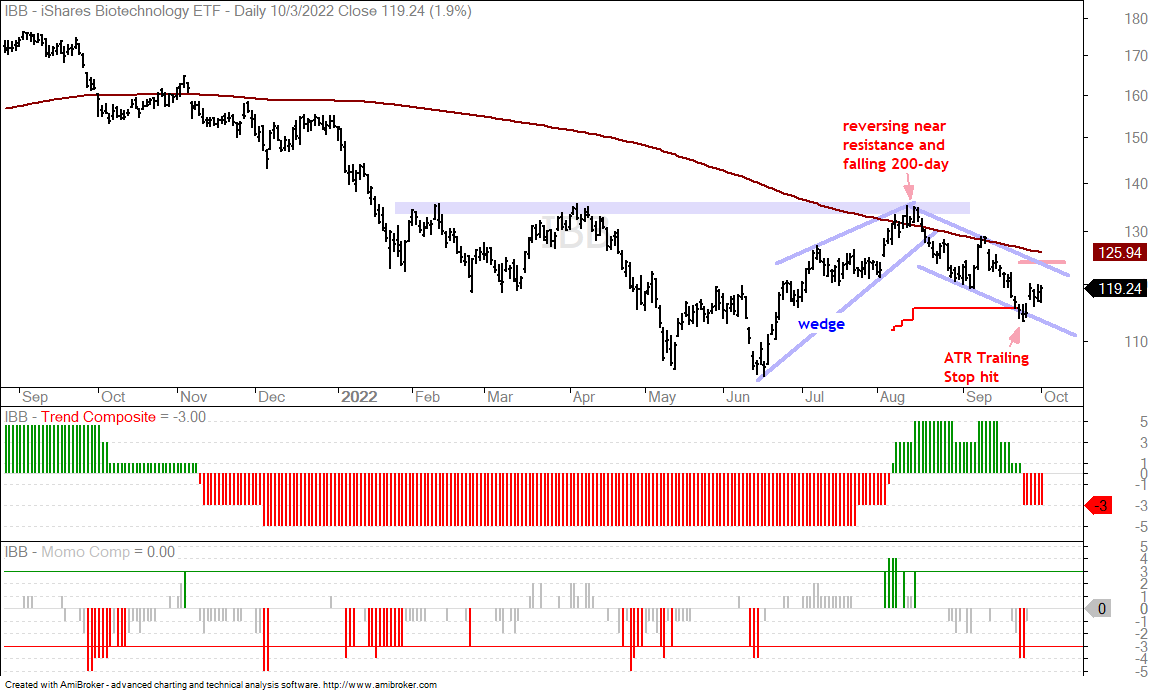
The next chart shows the Biotech ETF (IBB) triggering the ATR Trailing Stop and the Trend Composite turning bearish. This is because the September decline was deeper and IBB showed relative weakness (relative to XBI). IBB is a market-cap weighted ETF with the top ten holdings accounting for 50%. In contrast, XBI is an equal-weight ETF with the top ten holdings accounting for just 11.26%. The blue lines mark the upswing (wedge) and the current downswing (channel). A break above 124 would reverse the current downswing.
You can learn more about exit strategies in this post, which includes a video and charting options for everyone.
Three Clean Energy ETFs Hold Up Trends (TAN, ACES, QCLN)
The clean energy ETFs were hit hard in the second half of September with many triggering their ATR Trailing Stops (TAN, ICLN, PBW). The Trend Composites also turned negative for PBW, PBD and ICLN. Note that these ETFs are highly correlated and move in the same directions, but the size and speed of the price movements can different. This is why signals can differ.
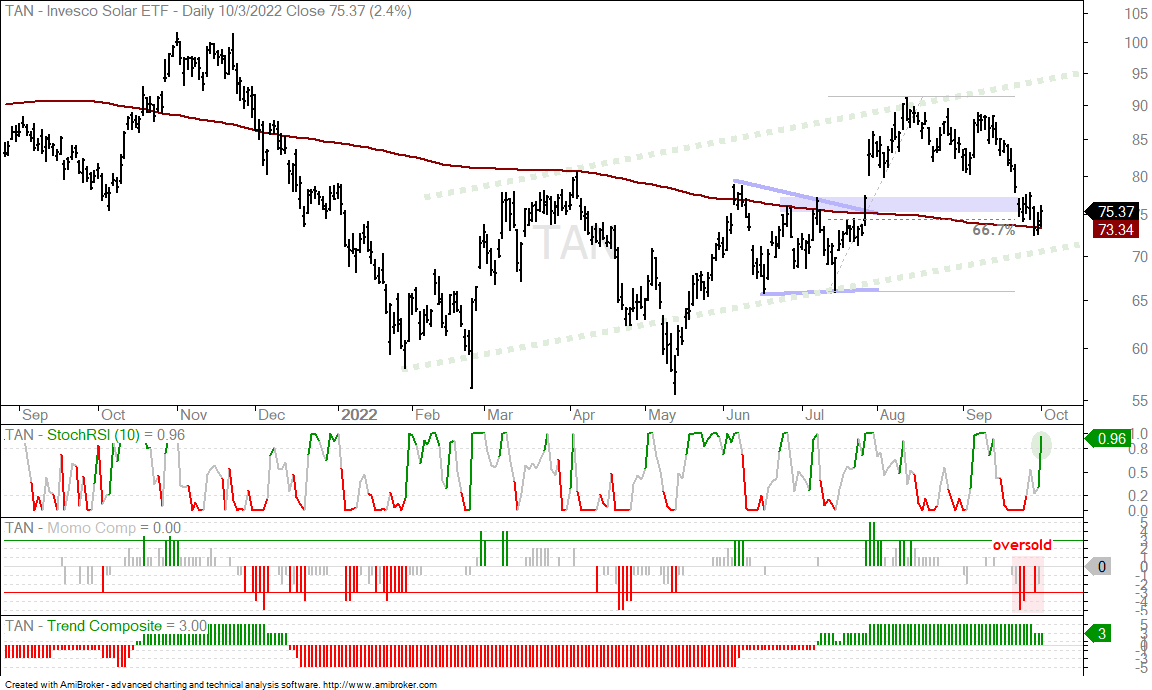
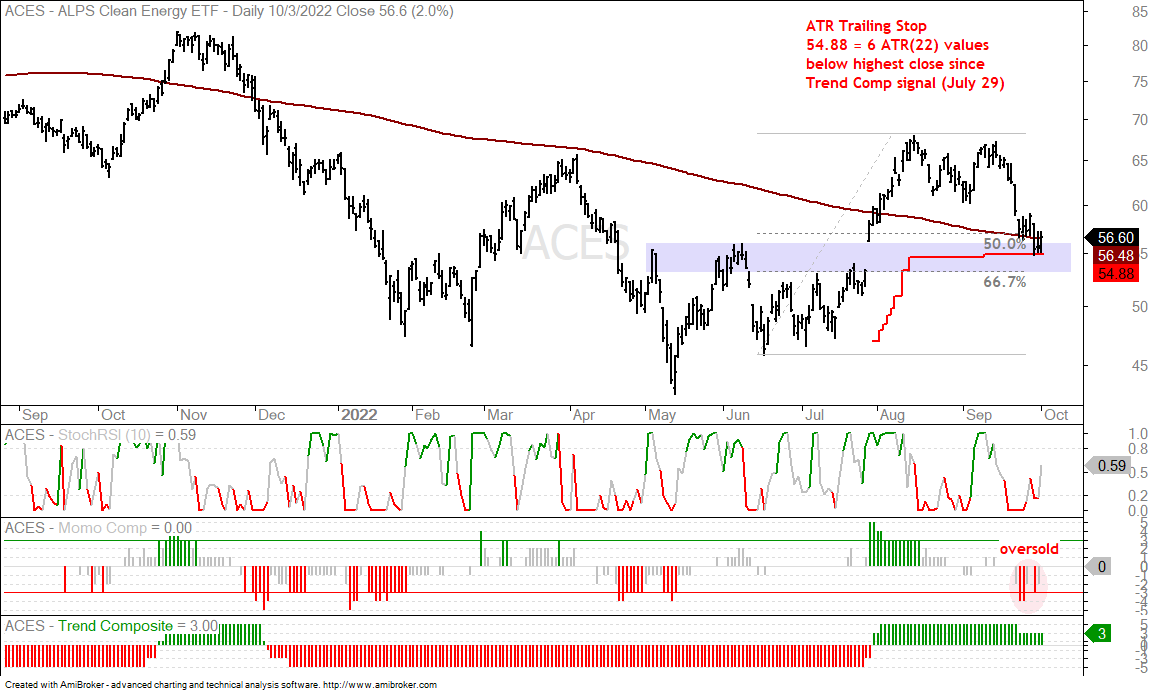
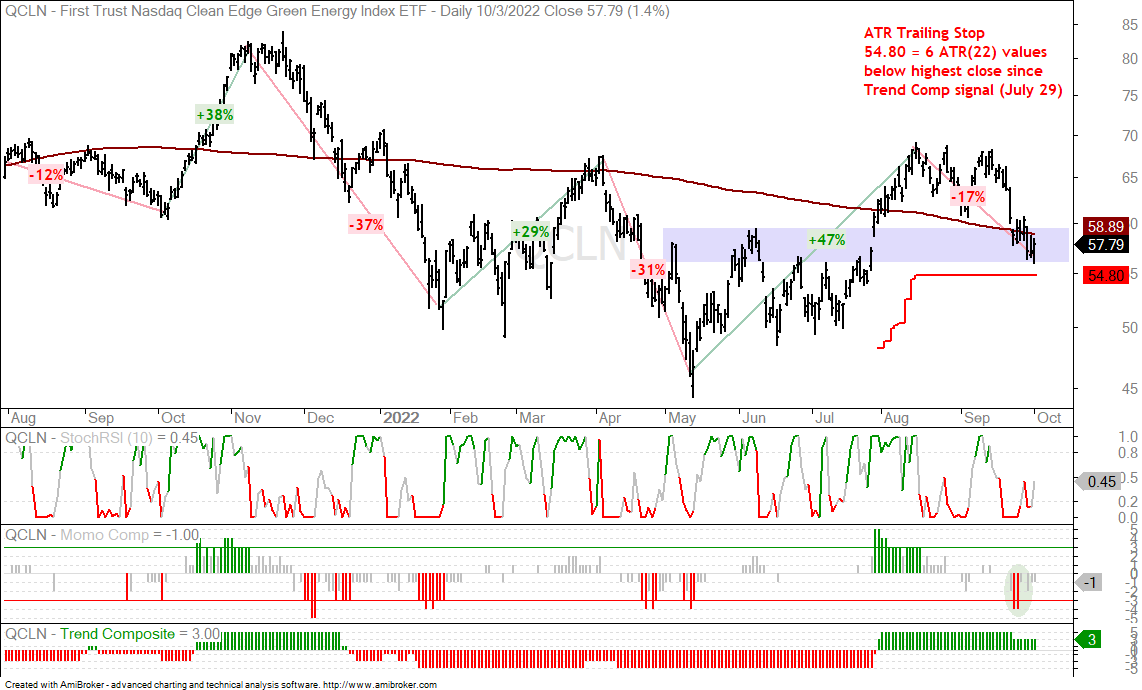
The Solar Energy ETF (TAN), Clean Energy ETF (ACES) and Clean Edge Green Energy ETF (QCLN) are holding up a little better than the others because their Trend Composites remain positive. TAN and QCLN are slightly above their 200-day SMAs and QCLN is less than 1% below. Even though these three are holding up better than the broader market, they are not always immune to broad market moves because they fell sharply in September. Nevertheless, they are still well above their summer lows and holding up better than most stock-based ETFs. The first chart shows TAN retracing around 2/3 of the July-August advance and becoming oversold as it hit its 200-day SMA in late September. This is a support-reversal zone and there was a StochRSI pop on Monday, which shows a short-term momentum thrust that could lead to a bounce. A bounce from here would keep the long-term uptrend alive.
The next chart shows ACES falling to a support-reversal zone marked by broken resistance (blue shading) and the 50-67% retracements. The ETF is also right at its 200-day SMA and the Momentum Composite was oversold in the second half of September. An oversold condition within a bigger uptrend is the alert to look for a bullish setup or catalyst. The support-reversal zone and oversold conditions provide the setup. A StochRSI pop above .80 would be the short-term catalyst.
The next chart shows QCLN with similar characteristics. I also added percentages for the price swings so traders can get an idea of the volatility in these ETFs. QCLN fell 17% from August to September. Prior to this decline, there were five swings since October 2021 with the smallest being 29%. Grab your hat because this is a ride at the rodeo.
The Trend Composite aggregates signals in five trend indicators: Bollinger Bands (125,1), Keltner Channels (125,2), 5-day Rate-of-Change of 125-day SMA, StochClose (125,5) and CCI-Close (125). The Trend Composite and ten other indicators are part of the TIP Indicator Edge Plugin for StockCharts ACP
Utilities and Healthcare Hold Above June Lows (XLU, XLV, IHF)
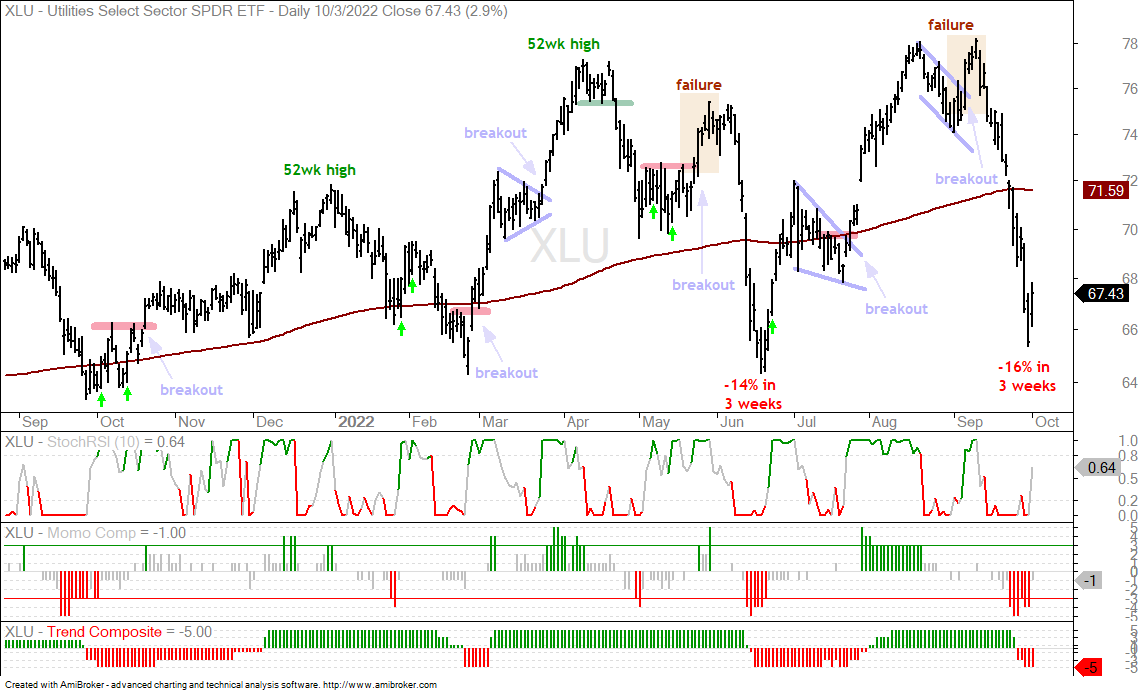
The Utilities SPDR (XLU) went from a leader with a new high on September 12th to a 16% decline in three weeks. The ETF plunged below its 200-day SMA, but crosses of the 200-day SMA have just resulted in whipsaws, as have Trend Composite signals over the past year. XLU is currently oversold and near the February-June lows. As with the June plunge, I do not see a pattern or setup on the price chart. XLU is simply oversold and near support, and this could give way to a bounce. The first indicator window shows StochRSI turning up and a move above .80 would show a short-term momentum thrust. The green arrows on the chart show when StochRSI crosses above .80 (within ten days of an oversold reading in the Momentum Composite (-3 or lower)). Such signals marked the October 2021 low, the May low and the June low. The January bounce off the 200-day SMA failed as the May signal was met with the June swoon.
You can learn more about exit strategies in this post, which includes a video and charting options for everyone.
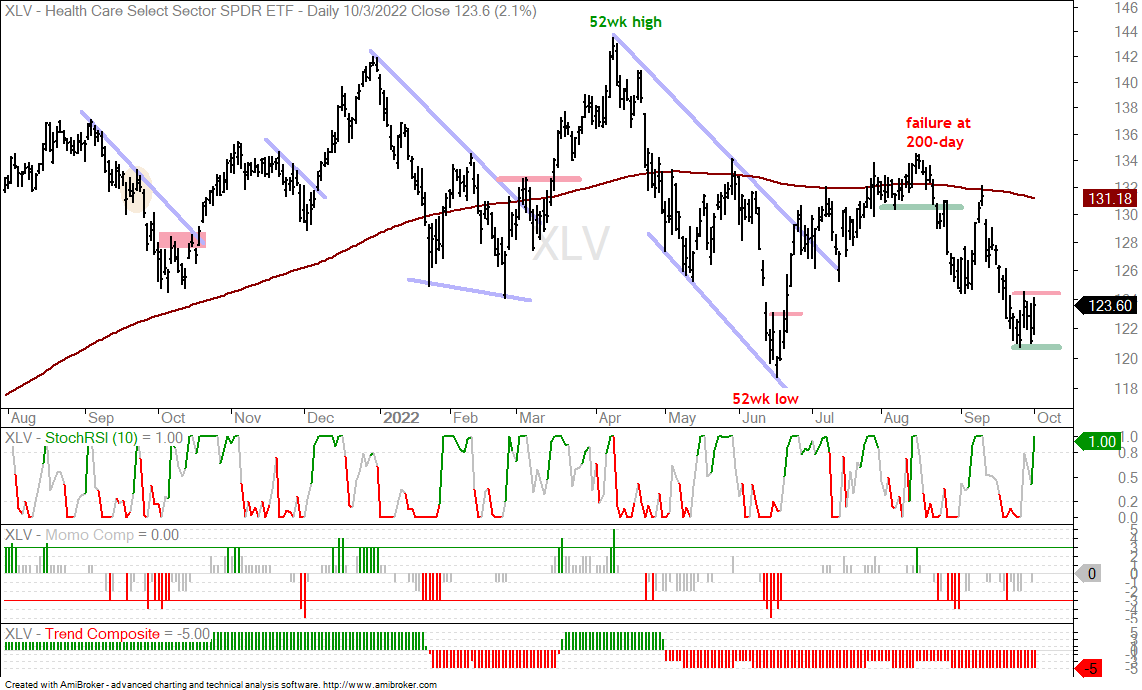
The next chart shows the Healthcare SPDR (XLV) failing near the 200-day SMA and falling around 10% from mid June to late September. The green arrows show when StochRSI surged above .80 (within 10 days of an oversold Momentum Composite). The September 2021 pop (yellow circle) fizzled right away, but the other pops led to at least a short-term bounce. XLV is currently setting up again as it firms over the last two weeks. There was a StochRSI pop on Monday and this pop remains valid as long as the late September low holds.
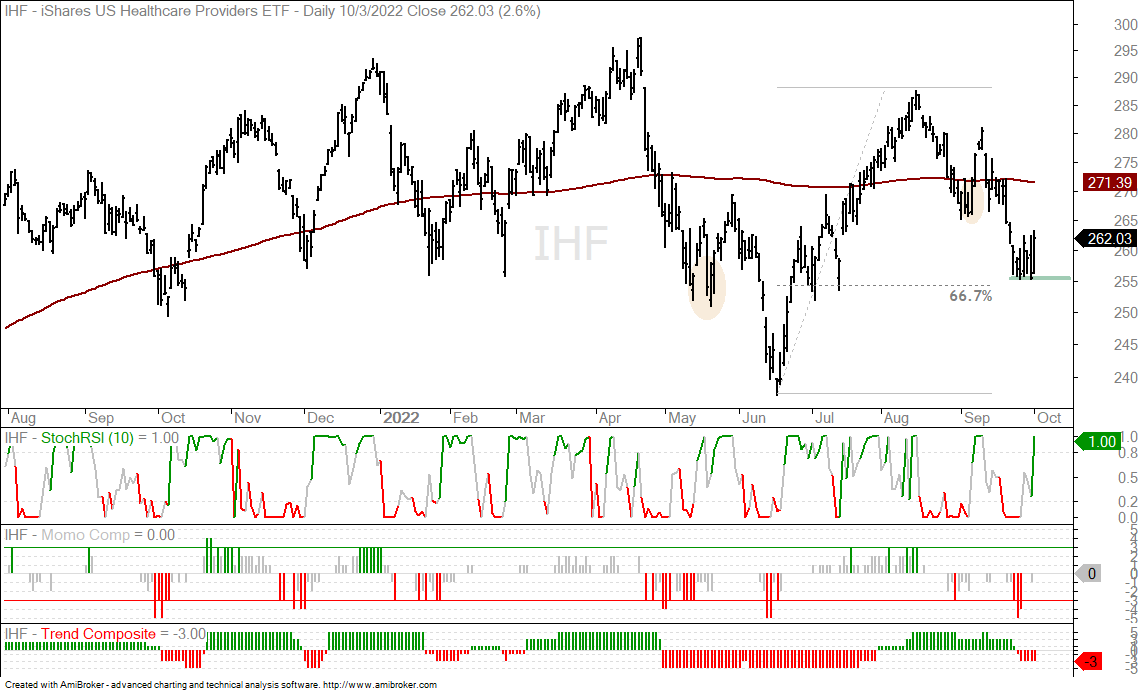
The next chart shows the Healthcare Providers ETF (IHF) crossing its 200-day SMA a dozen times over the past year as the ETF pretty much goes nowhere. It has been influenced by the bear market because it recorded a 52-week low during the June swoon and fell sharply from mid August to late September. IHF, however, is holding up better than the average stock-based ETF because it is above its June low. Again the green arrows show when StochRSI crosses above .80 (after an oversold condition). The bounces in mid May and early September were quite short (yellow ovals). Most recently, IHF retraced around 2/3 of the June-August surge and became oversold in late September. The ETF firmed the last six days and there was a StochRSI pop on Monday. First support is set at 255.
An oversold condition creates a mean-reversion setup, which is short-term in nature. The bounces do not always last long and a true mean-reversion strategy would look for a quick exit. We are talking days, not weeks. Mean-reversion setups can also be used by trend-followers to identify opportunities within a bigger uptrend, provided there is one.
Oil Bounces within Downtrend
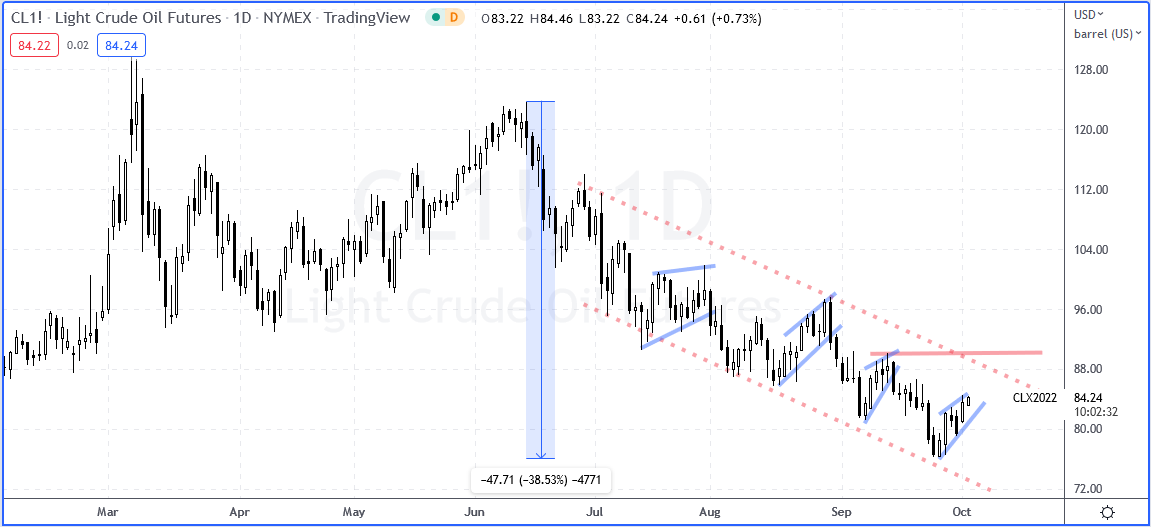
OPEC is meeting and considering a supply cut, which in turn is boosting the price of oil. Oil remains within a downtrend overall, but is in the midst of a short-term bounce (76 to 84). At this point, I consider this an oversold bounce within a bigger downtrend and I expect the bounce to fail. The red dashed line defines the downtrend with key resistance at 90. The blue lines mark the counter-trend bounces along the way. The big wild card, of course, is the OPEC decision. OPEC meetings are like FOMC meetings. They just add to the volatility and it is usually best to wait for the meeting to pass.
XLE Gaps back above Rising 200-day SMA (plus FCG)
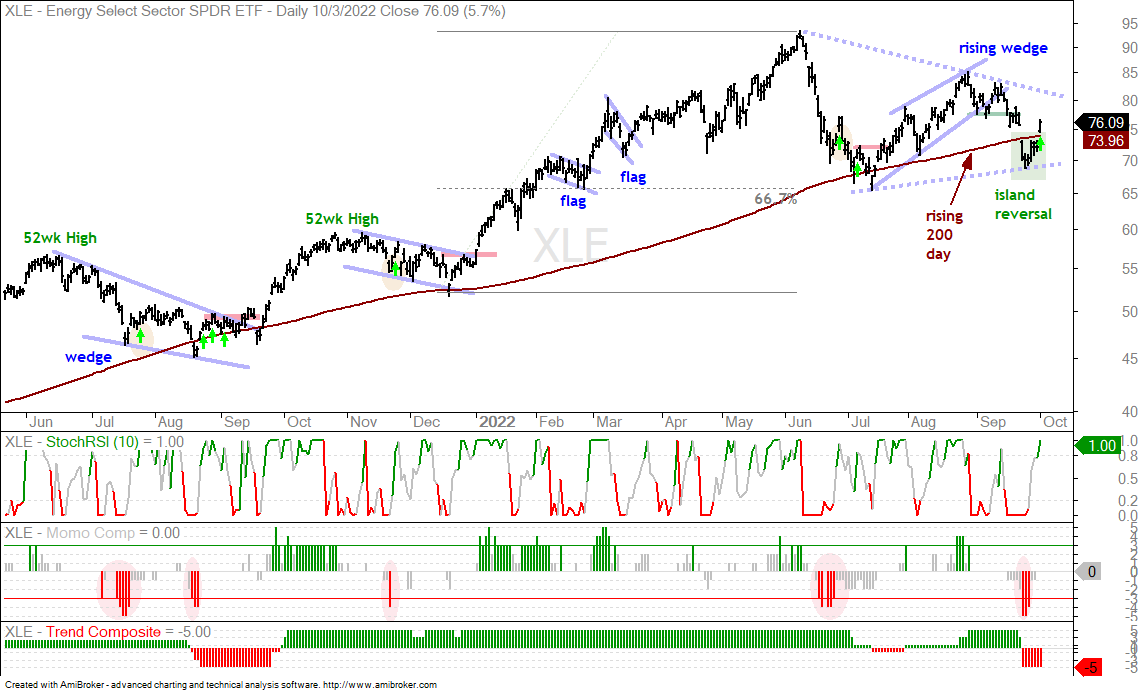
So we have a bear market for stocks and a downtrend for oil. This is not an ideal recipe for oil-related ETFs, which are highly correlated and move in the same direction (XLE, XOP, FCG, XES, PSCE). These ETFs, however, are still holding up better than most stock-based ETFs. The chart below shows the Energy SPDR (XLE) with StochRSI, the Momentum Composite and the Trend Composite. The Trend Composite is negative, but XLE is back above its rising 200-day SMA. The green shading shows a island reversal as the ETF gapped below the 200-day on 23-Sept, consolidated below the 200-day and gapped back above. Technically, this is a short-term bullish reversal and is valid as long as the gap holds. This island reversal reversed the short-term downswing and it is now possible that a higher low formed from July to September. This means a larger triangle consolidation is possible and a breakout at 84 would be bullish. Big triangles after new highs are bullish continuation patterns.
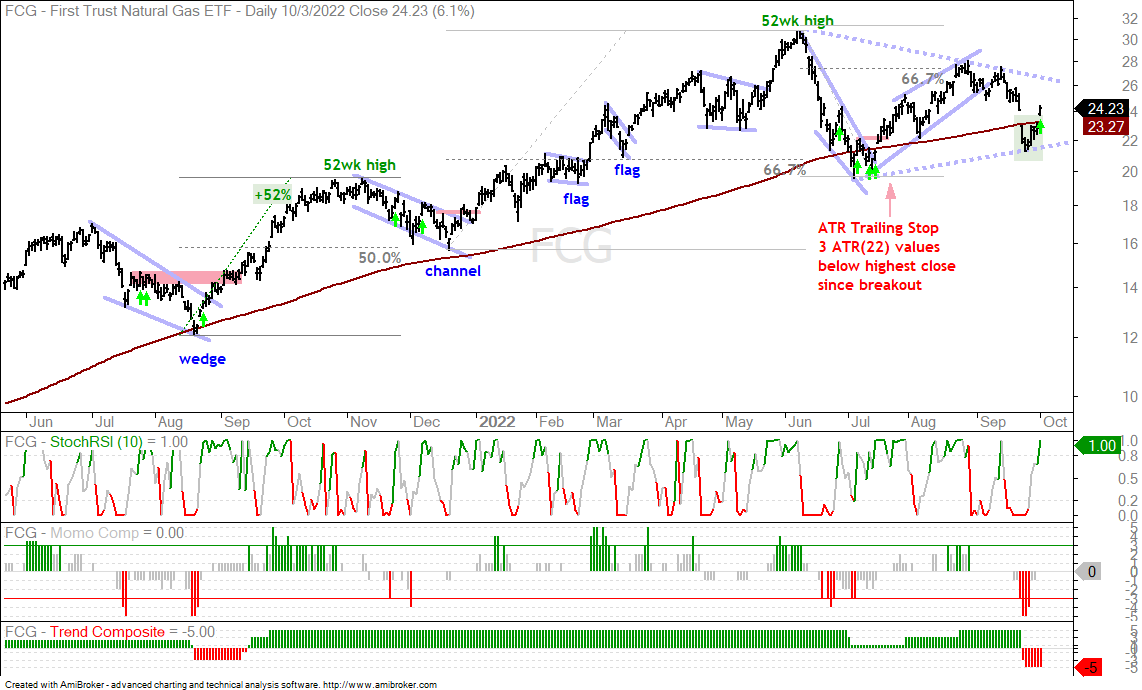
The green arrows show when StochRSI surges above .80 (after an oversold condition). It is worth noting that oversold pops in XLE did not mark the low of the pullback in July, November and June (yellow circles). There was a short bounce and then a lower low a week or two later. The ideal oversold setup is when we have an oversold Momentum Composite AND a bullish continuation pattern, such as a falling wedge, falling channel or even a short-term resistance level. The ideal pop is when StochRSI surges above .80 and there is short-term breakout on the price chart. Unfortunately, we do not always get the ideal setup and must often choose between indicator signals and pattern breakouts. The next chart shows the Natural Gas ETF (FCG) with similar characteristics.
Previous Report with Video (Thursday, 29 September)